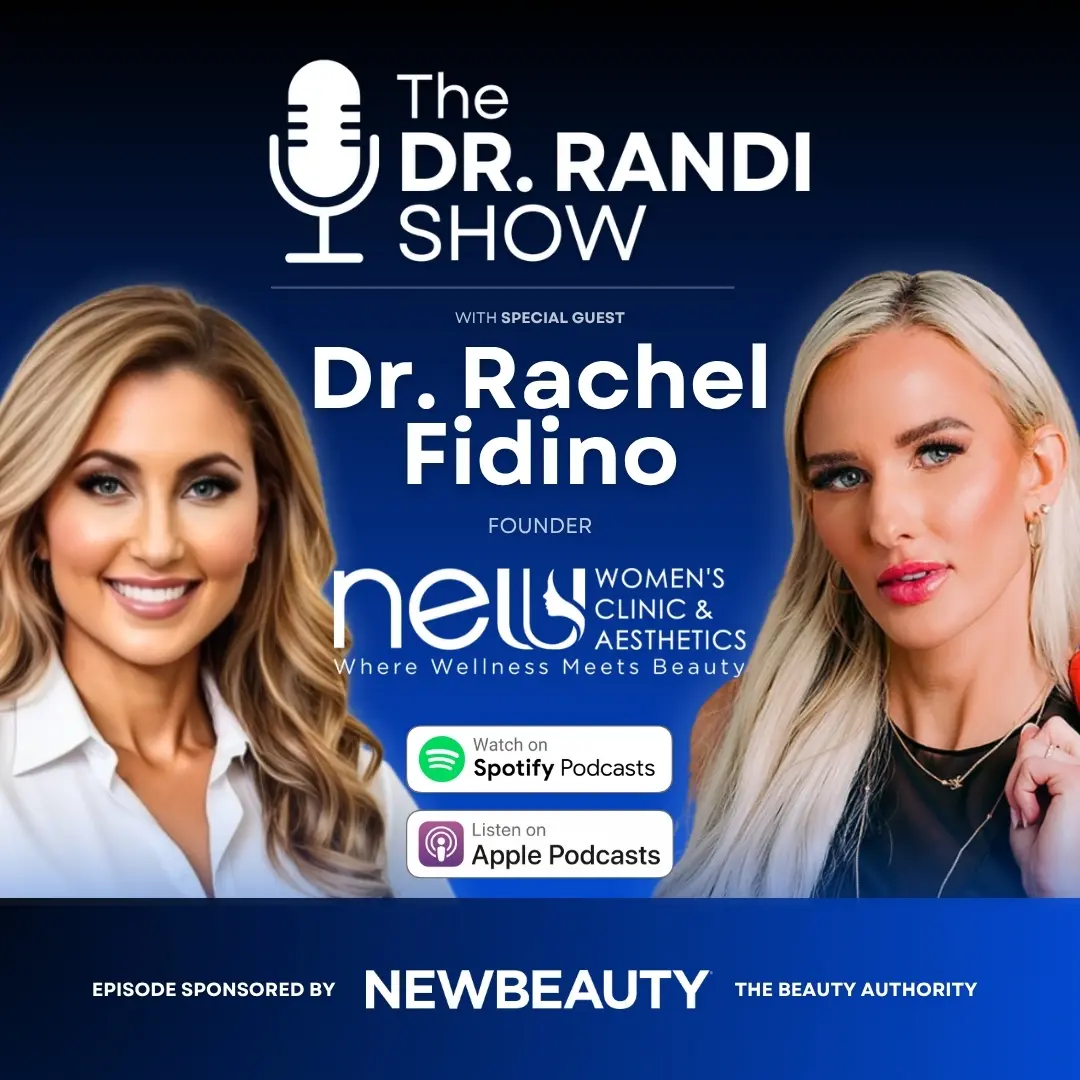
Dr. Rachel Fidino has helped more than 3,000 people reclaim their energy, vitality, and confidence by addressing one of the most overlooked issues in medicine: hormone imbalance. With personalized, science-driven treatments, she goes beyond masking symptoms — creating lasting transformations in health and quality of life.
In this episode, Dr. Randi Boyette sits down with the hormone health specialist and founder who’s changing the way patients experience care. With advanced testing, medical expertise, and a patient-first philosophy, Dr. Fidino is rewriting the narrative around hormones and longevity. She reveals how targeted therapies are improving energy, resilience, and overall well-being — and why traditional medicine too often misses the mark.
They uncover:
• The surprising ways hormone imbalance shows up — and why it’s often missed
• How conventional medicine leaves too many patients untreated or misdiagnosed
• The role of bioidentical hormone therapy in vitality and long-term health
• Why a patient-first approach leads to life-changing results
• What everyone should know before starting hormone treatment
Packed with real patient stories and practical insights, this conversation blends inspiration with science — offering a roadmap to better health, longer vitality, and a return to feeling like yourself again.
This episode is sponsored by NewBeauty 💄
📱 Listen and Watch on Spotify: https://spti.fi/Ao43YYi
🎧Listen on Apple: https://dub.sh/ZkTHlui
Episode FAQ
Why do so many women feel dismissed about menopause symptoms, and how can hormone therapy help?
On The Dr. Randi Show, Dr. Rachel Fidino, a board certified women’s health nurse practitioner with a doctorate and the founder of New U Women’s Clinic & Aesthetics, shared that she cares for more than 3,000 women on hormone therapy. She said many of her patients arrive frustrated after seeing several providers and being told that hot flashes, night sweats, poor sleep, and low libido are simply part of getting older. Dr. Fidino explained that she entered surgical menopause at 32 after a hysterectomy following a cervical cancer diagnosis, experienced hot flashes and a 40 pound weight gain, and was initially told it would get better with time before she found a provider who helped her. She said the most common thing her patients tell her once their hormones are balanced is that they feel like themselves again, often with better sleep, libido, relationships, and work life. This reflects Dr. Fidino’s personal and professional experience and is not medical advice.
What are the subtle signs of hormone imbalance in women that are often overlooked?
On The Dr. Randi Show, Dr. Rachel Fidino said hormone symptoms are not always dramatic hot flashes or night sweats, and that many women simply sense that something is not right. The symptoms she named as most often brushed off were trouble falling and staying asleep, weight gain, low libido, and fatigue or decreased stamina. She described asking patients probing questions about dry skin, hair loss, brittle nails, weight changes, and waking at the same time every night, such as a 2 a.m. internal alarm clock. Dr. Fidino also said that in her practice she sees some women who have been treated for anxiety or depression when, in her assessment, a hormonal imbalance was driving their symptoms, and that once their hormones are balanced she may work with them to gradually reduce antidepressants. She noted that antidepressants do have their place. This reflects Dr. Fidino’s clinical experience and is not medical advice.
At what age should women start testing their hormone levels, and is it ever too late to start hormone therapy?
On The Dr. Randi Show, Dr. Rachel Fidino said she begins looking at hormones in some women as early as their twenties, explaining that testosterone is one of the first hormones to decline, starting in the late twenties. She described progesterone as typically dropping in the mid thirties and estrogen as the last hormone to decline, usually in the forties, and said that among her more than 3,000 hormone patients she has never seen a woman over 40 with a normal hormone panel. Host Dr. Randi Boyette shared that she had her own hormones checked in her early forties, before symptoms appeared. At the other end of the age range, Dr. Fidino said it is never too late, noting she had consulted with a 65 year old patient that morning, and encouraged women who do not feel well in any chapter of life to explore their options with the right provider. This reflects Dr. Fidino’s clinical experience and is not medical advice.
Why is perimenopause often harder to manage than menopause?
On The Dr. Randi Show, Dr. Rachel Fidino said perimenopause is one of the most challenging times for women and, in her practice, harder to treat than menopause. She explained that by menopause many women have adjusted to a steady low hormone state, while in perimenopause estrogen is still pulsing unpredictably, which she compared to a lightning bolt rather than a smooth bell curve, often alongside irregular or chaotic periods. She said these fluctuations often do not settle until the early fifties, and that some women continue having periods past 55. Dr. Fidino described managing perimenopause as an art that requires careful, individualized balancing. This reflects Dr. Fidino’s clinical experience and is not medical advice.
How are hormone levels tested and monitored during hormone therapy?
On The Dr. Randi Show, Dr. Rachel Fidino said timing matters when ordering hormone panels. For women who still have monthly periods, she described typically drawing labs on day three of the menstrual cycle and again about a week before the next period to get a clear snapshot. She explained that a woman may be low in just one hormone, so she may start with a single hormone, such as progesterone, for about four weeks, then reevaluate and slowly add others over time if needed. She also said a full evaluation may include checking whether the thyroid is playing a role. Once patients are balanced, Dr. Fidino said her clinic rechecks levels at least every six months, and often every three to four months, or sooner if something changes. This reflects Dr. Fidino’s clinical experience and is not medical advice.
What is the difference between bioidentical and synthetic hormone replacement therapy, and does insurance cover it?
On The Dr. Randi Show, Dr. Rachel Fidino said she prescribes only bioidentical hormone replacement therapy in her practice, and explained that bioidentical hormones can be either FDA approved medications or compounded formulas. She said a common misconception is that bioidenticals are never covered by insurance, when in her experience FDA approved options often are. Examples she gave included Minivelle, a transdermal estrogen patch she prefers over oral estrogen because it stays on through showering and swimming, and Prometrium, a bioidentical progesterone. She contrasted these with synthetic options such as Prempro and norethindrone acetate. Dr. Fidino said compounded options, including the testosterone pellets she prescribes, are typically not covered by insurance, noting that testosterone is not FDA approved for women and that not all testosterone pellets are equal in quality. This reflects Dr. Fidino’s clinical experience and is not medical advice.
Does hormone replacement therapy increase the risk of breast cancer?
On The Dr. Randi Show, Dr. Rachel Fidino said the Women’s Health Initiative study frightened many women away from hormone therapy, and explained that it studied synthetic medications such as Prempro. As she described it, the study found that estrogen alone did not increase breast cancer risk, while the group taking a synthetic progestin showed a slightly increased risk, which she distinguished from bioidentical progesterone. Based on her reading of the research, she said she believes bioidentical hormones prescribed appropriately are safer, and she noted that age is the biggest risk factor for breast cancer. Host Dr. Randi Boyette added that fears rooted in older research still circulate, even within the industry. Anyone weighing hormone therapy should review their personal and family history with their own provider. This reflects Dr. Fidino’s clinical perspective and is not medical advice.
How do you find a qualified hormone therapy provider for perimenopause or menopause?
On The Dr. Randi Show, Dr. Rachel Fidino encouraged women to find a provider they feel comfortable talking openly with and to advocate for themselves, including asking to have their hormones tested. For women who are unsure where to start, or who feel their primary care provider may not manage hormones, she pointed to The Menopause Society, where providers who specialize in hormone management can list their information. She also said providers who are not comfortable treating hormonal imbalance should refer patients to someone who is, rather than minimizing their symptoms. Dr. Fidino shared that she has been on hormone therapy herself for more than 10 years, and that she treats every patient like family because she knows what it feels like to be brushed off. This reflects Dr. Fidino’s personal and professional experience and is not medical advice.
What health policy changes are being pursued for breast MRI screening and breast reconstruction coverage?
On The Dr. Randi Show, Dr. Rachel Fidino shared that her family carries the BRCA1 gene, which she noted can increase the risk of certain cancers such as breast and ovarian cancer, and that as a high risk patient she needed imaging every six months that her insurance often did not fully cover. She said that after about two years of lobbying and testifying, she helped pass a bill in Washington State so that women deemed high risk are now covered for annual breast MRI screening. She said she is now looking at legislation in other states so that women who have a double mastectomy, including a nipple sparing mastectomy, can have reconstruction covered rather than treated as an aesthetic choice. Dr. Fidino also voiced support for precision medicine, describing a cheek swab test, which she said insurance covers, that shows how a patient breaks down certain medications so the right one can be prescribed the first time. This reflects Dr. Fidino’s personal advocacy experience and is not medical or legal advice.
What is a wellness meets beauty clinic, and how is New U Women’s Clinic & Aesthetics expanding?
On The Dr. Randi Show, Dr. Rachel Fidino described New U Women’s Clinic & Aesthetics as built on a foundation of Wellness Meets Beauty, starting with women’s health, including hormone balancing and weight loss, and then supporting patients on the aesthetic side once they feel good on the inside. She said this is the reverse of many med spas that add women’s health later, described the clinic as a concierge style, premier experience, and noted that weight loss conversations often lead back to whether someone is managing a patient’s hormones. She shared that the clinic is franchising so the model can reach women across the country, with its franchise disclosure document and operations manual nearing completion at the time of recording. Dr. Fidino also discussed an upcoming reality series, which she called Dr. Badge Queen, following her life as a CEO through the franchising journey. This reflects Dr. Fidino’s personal and professional experience.