Peptides are everywhere: in weight-loss medications, longevity treatments and skincare. But topical peptides are not the same as injectable therapies, and not every peptide formula delivers results. So, what can peptides really do for the skin?
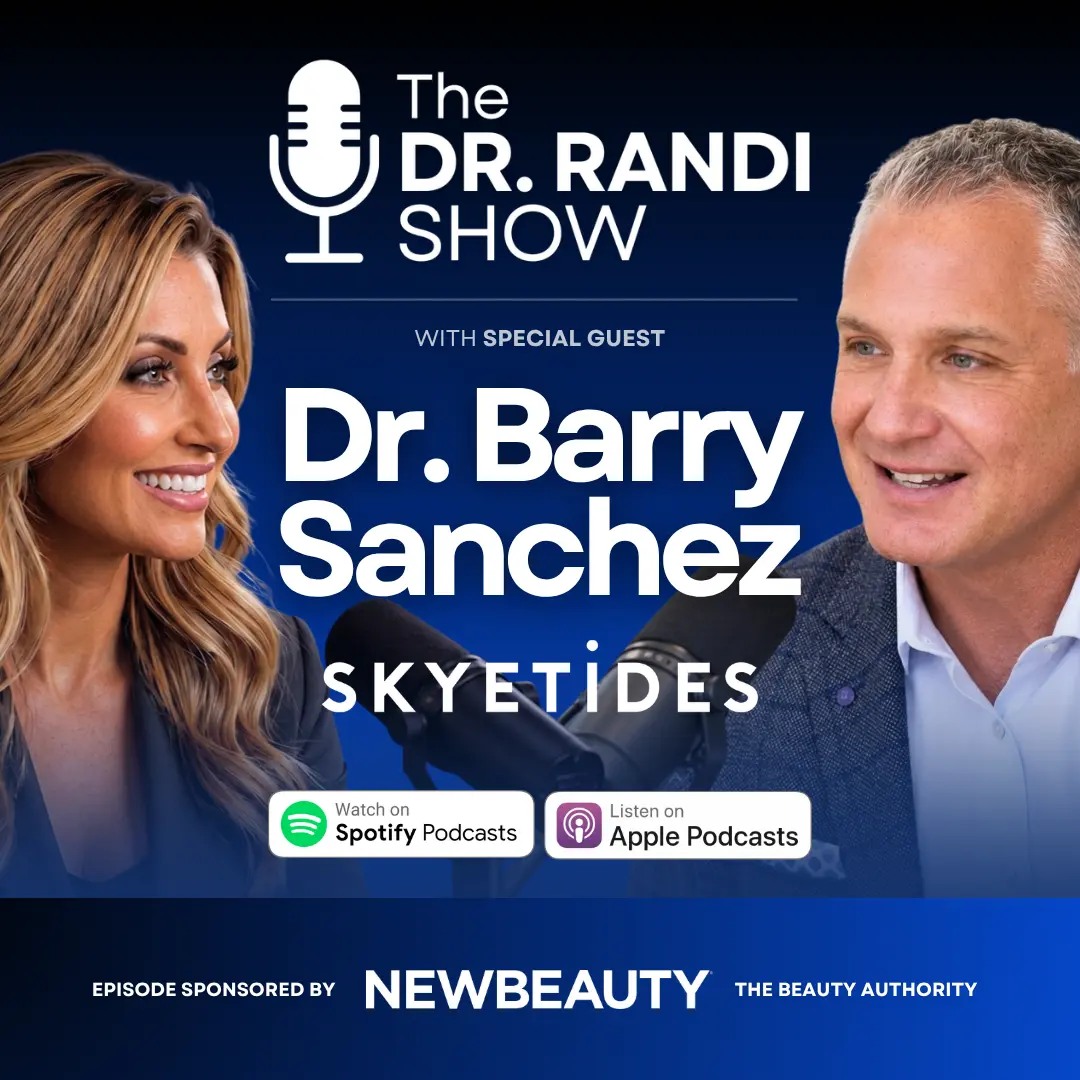
Dr. Barry Sanchez, a board-certified, Stanford-trained surgeon and Chief Medical Officer of Skye Health, joins The Dr. Randi Show to explore how significant weight loss can affect skin quality across the face and body.
Dr. Barry examines the relationship between weight loss and changes in facial volume, skin firmness and overall skin quality. He also identifies who may be most susceptible to these changes and why preventative skincare belongs in the weight-loss conversation from the beginning.
They also discuss Skyetides, an advanced peptide skincare line formulated with clinical-grade actives. Dr. Barry explains how its formulas are designed to support firmness, hydration and skin renewal, and what results to expect with consistent use.
In this episode:
- The difference between GLP-1s and topical skincare peptides
- The truth behind “Ozempic face”
- How weight loss affects volume, muscle and skin quality
- What determines whether a peptide formula can deliver results
- Inside Skyetides GLOW, AWAKEN and ELEVATE
- How peptide skincare works alongside lasers and injectables
This is where weight loss, peptide science and skincare meet, and why the skin conversation needs to begin before the changes do.
Sponsored by NewBeauty 💄
📱 Listen and Watch on Spotify: https://spti.fi/Jn9X18T
🎧 Listen Now on Apple: https://dub.sh/8CGlX27
Episode FAQ
How does GLP-1 weight loss affect the skin, and why should skin care be part of the plan?
On The Dr. Randi Show, Dr. Barry Sanchez, a board certified, Stanford trained bariatric and metabolic surgeon, chief medical officer of Skye Health, and medical advisor to the peptide skincare brand Skyetides, discussed what happens to the skin during significant weight loss with GLP-1 medications. He shared that over about 20 years in practice, he has seen patients lose weight and see their health improve, only to look in the mirror and feel they looked older, with excess skin sometimes changing how they experienced their journey. He believes skin should be part of the weight loss conversation from the start, and he walked through who is most prone to skin changes, how to prepare the skin, how skincare peptides differ from GLP-1 peptides, and what skin longevity means to him. This reflects Dr. Sanchez’s personal and professional experience and is not medical advice.
What face and skin changes happen after major weight loss, and who is most at risk?
On The Dr. Randi Show, Dr. Barry Sanchez said facial changes are often something patients do not think about at the start, but notice when they look in the mirror every day. He described a loss of facial volume as patients lose some of the fat around the face, and said that patients who do not get enough protein can also lose muscle and some of the structure beneath the skin. In his experience, the risk of volume loss and laxity increases with age, prior UV damage, chronic inflammation, a history of smoking, a large amount of weight to lose, and low protein intake. He added that speed can matter too, since losing weight quickly tends to mean losing muscle along with fat, which he works to prevent. He shared that some patients have even told him they were hesitant to lose weight because they did not want to look older or have excess skin. This reflects Dr. Sanchez’s personal and professional experience and is not medical advice.
Can skin bounce back after weight loss, and how can you prepare your skin before starting a GLP-1?
On The Dr. Randi Show, Dr. Barry Sanchez said some rebound is possible once weight stabilizes, especially for younger people whose skin is more elastic, but the original facial volume may not fully return, which is why he prefers a proactive approach. He explained that as a bariatric surgeon he prepares patients nutritionally and metabolically before surgery, and he believes the skin deserves the same preparation whether weight loss comes from surgery or GLP-1 medications. The foundations he described include proper protein nutrition, resistance training, stress reduction, sleep, hormone optimization, and supporting the skin’s own repair system. Results vary from person to person. This reflects Dr. Sanchez’s personal and professional experience and is not medical advice.
What causes the facial changes people call Ozempic face, and should skin guidance be part of every GLP-1 plan?
On The Dr. Randi Show, host Dr. Randi Boyette noted that the phrase Ozempic face caught on a year or two ago, and Dr. Barry Sanchez agreed with her view that the weight loss, not the medicine itself, drives these changes. In his view, there are no studies showing that GLP-1 medications themselves cause the issue, and the change comes from volume loss. He said losing weight quickly is not the right answer, and that Skye Health believes in medically supervised GLP-1 treatment with attention to nutrition and foundational habits. He sees talking about skin changes up front as part of informed consent, so patients know they may notice volume loss or skin changes and have a plan for them, and he does not want anyone to avoid losing weight out of fear of what will happen to their skin. This reflects Dr. Sanchez’s personal and professional experience and is not medical advice.
What is the difference between GLP-1 peptides and skincare peptides, and how does peptide signaling work?
On The Dr. Randi Show, Dr. Barry Sanchez explained that GLP-1 medications and topical skincare peptides share the name peptide but have very different processes and targets. He described GLP-1s as systemic molecules that act on metabolism and appetite control, while skincare peptides focus on what happens in the skin, including renewal, repair, and skin structure, so the two are not interchangeable. He called peptides cellular messengers: short chains of amino acids that the body naturally makes by the thousands, with receptors on every cell. In skincare, he said the goal is to deliver targeted peptides that signal the skin’s normal processes, such as repair, collagen formation, softening of expression lines, and reducing inflammation. This reflects Dr. Sanchez’s personal and professional experience and is not medical advice.
Do peptides in skincare actually work, and what makes a peptide product effective?
On The Dr. Randi Show, Dr. Barry Sanchez said there are studies on peptide skincare, including some prospective randomized studies, but they tend to be short and specific to the peptide and formulation. He described the results as real but modest, said longer studies are still needed, and stressed that peptides are not magical, which is why he also emphasizes foundational habits. He named three things he believes determine whether a peptide product can deliver visible results: the right combination of peptides that work well together, a stable formulation, and a delivery system that gets the peptides to the right level of the skin. In his words, a peptide sitting on the surface of the skin is really just an expensive moisturizer. He explained that Skyetides uses a multi-peptide approach designed to target several pathways in the skin rather than just one. This reflects Dr. Sanchez’s personal and professional experience and is not medical advice.
How does a peptide skincare routine with a serum, eye treatment, and moisturizer work?
On The Dr. Randi Show, Dr. Barry Sanchez walked through three Skyetides products designed to work together or on their own. Glow is a lightweight, water-based daily serum that he said combines five peptides with a 4D hyaluronic acid designed to reach different depths of the skin. He explained that it includes the copper peptide GHK to support collagen and elastin, along with SNAP-8 and Argireline, which he said work on the same pathway as Botox but are designed to reduce muscle contraction rather than paralyze the muscle, to help soften expression lines. Awaken is an eye treatment with two peptides for skin structure, caffeine to help with puffiness, botanicals for dark circles, and barrier and hydrating ingredients, which he said matters because the eye area has the thinnest skin and shows the most expression. Elevate closes the routine as a moisturizer with many of the same peptides as Glow, plus resveratrol as an antioxidant and a squalane base for barrier support. He added that sunscreen can go on top, and that the line also includes Defend, which he described as a protective shield for the day. This reflects Dr. Sanchez’s personal and professional experience and is not medical advice.
How long does it take to see results from peptide skincare?
On The Dr. Randi Show, Dr. Barry Sanchez said that with consistent use, people tend to notice improvements in skin texture, hydration, and smoothness first, followed by changes in expression lines and puffiness, which he said is also what he noticed first when he began using the products. Deeper remodeling of the skin, he explained, takes consistent use over weeks, and the Skyetides products were designed for ongoing daily use. Host Dr. Randi Boyette, who shared that she is 55 and not taking a GLP-1 medication, said she has used the line for about six months and that the Awaken eye treatment, with its applicator, has become her favorite. Results vary from person to person. This reflects Dr. Sanchez’s personal and professional experience and is not medical advice.
Can peptide skincare be used with retinoids, vitamin C, and in-office treatments like lasers and injectables?
On The Dr. Randi Show, Dr. Barry Sanchez said peptide skincare is meant to be an addition to a routine, not a replacement. In his view, it can be used alongside retinoids and sunscreen, with one caution: he said low pH products such as L-ascorbic acid should not be applied at the same time as copper peptides, though both can still be part of the same overall routine, and he recommends medical oversight when combining skincare actives. For people already investing in injectables, lasers, peels, microneedling, and energy based treatments, he described three roles for peptide skincare: before a procedure, barrier support and hydration to help prepare the skin; after a procedure, peptides to support the skin’s repair process; and between treatments, maintenance to keep the skin healthy and vibrant. This reflects Dr. Sanchez’s personal and professional experience and is not medical advice.
What does skin longevity mean, and who should think about peptide skincare?
On The Dr. Randi Show, Dr. Barry Sanchez described skin longevity as vitality rather than reversing or stopping aging, which he said is not possible. He explained that with age, collagen production declines and chronic inflammation and long term UV damage take a toll, but the skin’s repair system is still there, and the goal is to support those natural processes. He called protein, nutrition, sleep, hormones, and metabolic health foundational, describing the skin as a window into overall health, and said he believes anyone facing natural aging, UV exposure, chronic inflammation, or weight loss should be part of the conversation. Looking ahead five years, he expects peptide science to move toward better paired peptide combinations, more careful formulation and concentration, and improved delivery systems, noting that putting 20 peptides into a product is only an ingredient list. This reflects Dr. Sanchez’s personal and professional experience and is not medical advice.