What if the sunscreen you trust every day is quietly accelerating skin aging?
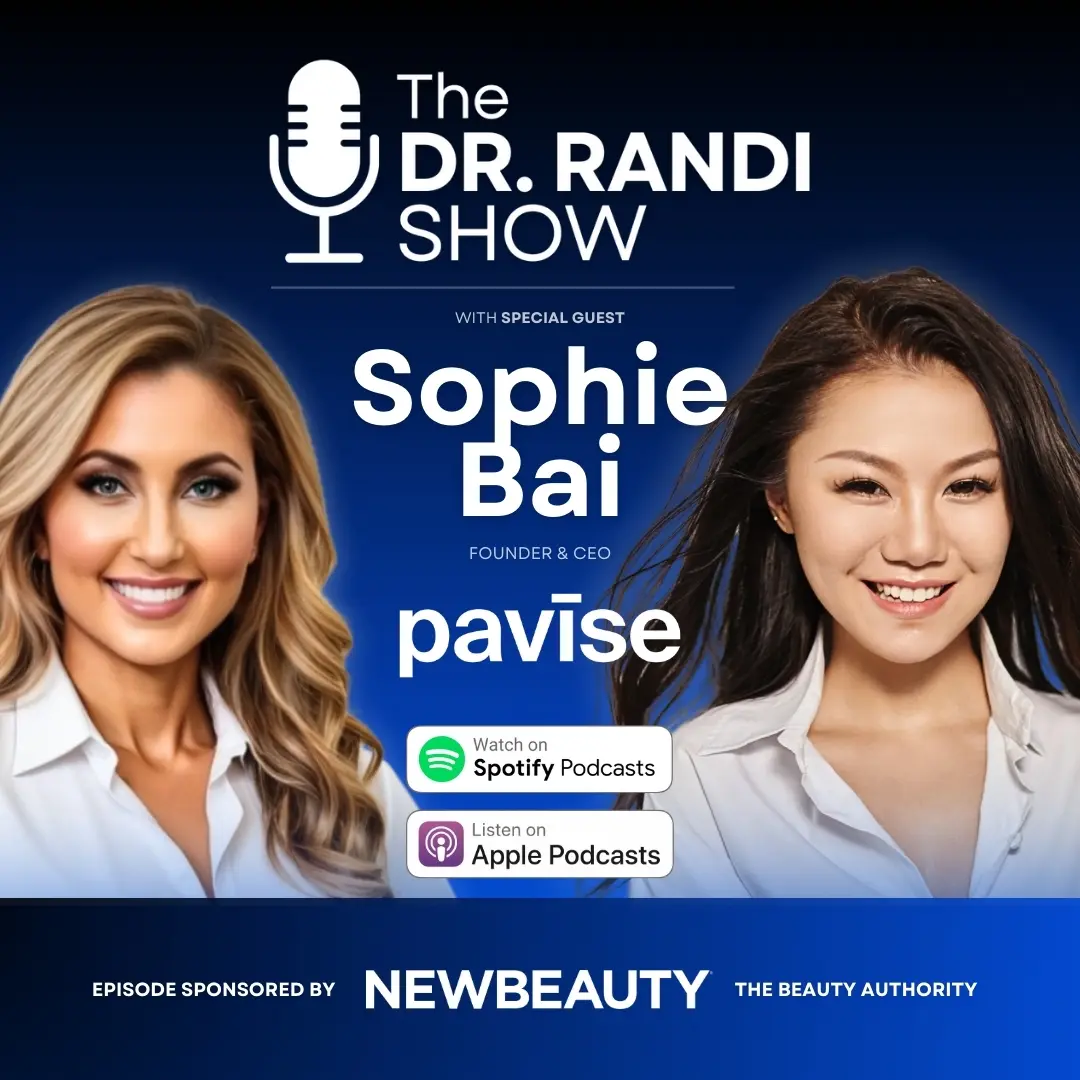
In this episode, Dr. Randi Boyette sits down with Sophie Bai, the MIT-trained scientist and founder of Pavise, to discuss the technology that’s turning the SPF world upside down. Backed by Jay-Z’s venture firm and the former CEO of Allergan, Sophie Bai reveals how her patented DiamondCore® UV filter doesn’t just block rays, it neutralizes the reactive oxygen species (ROS) that account for up to 90% of visible skin aging.
You’ll learn:
* How traditional sunscreens can create free radicals that damage skin
* Why Pavise’s nano-diamond zinc formula stops aging at the molecular level
* Clinical results showing rapid improvement in melasma, rosacea, fine lines, and post-procedure healing
* The surprising truth behind “clinically proven” claims in beauty marketing
* Why Sophie Bai believes the future of skincare is medical-grade science, not marketing hype
From billion-dollar drug research to the next frontier of sun protection, Sophie Bai shares how skincare as healthcare is here, and why protecting your skin now is the smartest anti-aging move you’ll ever make.
This episode is sponsored by NewBeauty💄
📱 Listen and Watch on Spotify: https://spti.fi/qpiwqdb
🎧 Listen Now on Apple: https://dub.sh/KxPT7sP
Episode FAQ
What did this episode of The Dr. Randi Show cover about next-generation sunscreen and the skincare brand Pavise?
In this episode of The Dr. Randi Show, host Dr. Randi Boyette spoke with Sophie Bai, a chemical engineer and former cancer drug researcher who founded the skincare brand Pavise. Sophie Bai shared how she developed a patented UV filter technology called DiamondCore in her lab at MIT, why she believes UV exposure and reactive oxygen species drive most visible skin aging, and how her brand approaches clinical data, pricing, and working with dermatologists. The conversation also touched on skincare trends she questions, such as beef tallow and topical hyaluronic acid claims, and the myth that sunscreen causes cancer. The answers below reflect her personal experience and opinions and are not medical advice.
What is DiamondCore technology, and how is it different from traditional sunscreen filters?
On The Dr. Randi Show, Sophie Bai described DiamondCore as a nanodiamond-augmented zinc oxide composite that her team synthesized in the lab at MIT. According to Sophie Bai, traditional UV filters can themselves generate reactive oxygen species (ROS), which she called a central hallmark of aging, meaning people may still experience aging from their sunscreen. She explained that DiamondCore was designed to do two things at once: provide high UV protection, especially in the UVA range that she said ages skin the most and is not reflected in SPF, and scavenge reactive oxygen species created by UV and environmental stressors. This reflects her perspective as the technology’s creator and is not medical advice.
How much of skin aging is caused by UV exposure?
Sophie Bai said on The Dr. Randi Show that, looking at skin aging from first principles as a chemical engineer, UV exposure is responsible for up to 80 to almost 90 percent of skin aging. She added that reactive oxygen species, generated by UV light and by some UV filters, are abundant in our environment, and that addressing both UV and ROS together could target the vast majority of the aging concerns people have. In her view, this makes daily sun protection a non-negotiable part of any anti-aging routine. This reflects her personal perspective and is not medical advice.
Why is sun protection important after lasers, microneedling, and other in-office skin treatments?
Sophie Bai explained on The Dr. Randi Show that skin regeneration treatments are not as effective if people walk out of the office after lasers or more aggressive procedures without proper photo protection. Host Dr. Randi Boyette added that she has seen friends lose the results of aggressive treatments after going back out in the sun, and that even brief exposure can bring back a brown spot someone worked hard to fade. Sophie Bai said this is why she built very high UVA and UVB protection into her product, and noted that dermatology partners have been supportive of using it post-procedure. This reflects their personal experiences and opinions and is not medical advice.
Can a sunscreen-based skincare product help with melasma, rosacea, and fine lines?
On The Dr. Randi Show, Sophie Bai said that when she talks about results, she means common concerns such as melasma, rosacea, fine lines and wrinkles, post-inflammatory hyperpigmentation (PIH), and skin elasticity. She shared that her company has published clinical research on rosacea and melasma in different journals, and that users of her brand’s product report visible results in as little as four weeks. She also said the delivery system in the formula can help the penetration of paired ingredients. These are her descriptions of her own brand’s research and customer experience, individual results vary, and this is not medical advice.
What should “clinically proven” mean in skincare?
Sophie Bai, whose background is in cancer drug research, said on The Dr. Randi Show that the term clinically proven can be used very loosely in the consumer world compared with drug development, where safety and clinical data can make or break a company. She described her own standard as not cherry-picking data, not showcasing a single outlier result, and not relying on flattering lighting in photos. She said her team, made up of former Harvard and MIT drug developers, approaches skincare almost as if they were creating a drug, guided by the belief that skincare is healthcare. This reflects her personal and professional perspective and is not medical advice.
Why does a science-led SPF cost more than a typical sunscreen?
Asked on The Dr. Randi Show about her product’s $148 price point, Sophie Bai said that if someone thinks of it only as a sunscreen, she would tell them not to buy it because it is too expensive. Her view is that it is meant to replace several products, comparing it to how the iPhone combined a phone, camera, and GPS into one device, and she noted that people often spend separately on products like vitamin C serums and exosomes. She said her brand has a very high reorder rate and that repeat purchase is the metric she watches most closely. This reflects her perspective as the brand’s founder and is not medical or financial advice.
Does topical hyaluronic acid actually penetrate the skin?
Sophie Bai, who said her specialty is drug delivery including transdermal delivery, shared on The Dr. Randi Show that hyaluronic acid has too large a molecular weight and is too water soluble to easily get past the skin’s outer barrier, the stratum corneum. In her opinion, topical hyaluronic acid products that work do so by helping retain moisture on the skin’s surface rather than changing the dermis. She added that whether a product “works” means different things to different people, and that if a dry-skin product delivers moisture, that can be a genuine result. She also said she considers claims that beef tallow treats psoriasis, eczema, and acne better than other options to be a stretch. This reflects her personal opinion and is not medical advice.
Does sunscreen cause cancer?
Sophie Bai said on The Dr. Randi Show that the belief that sunscreen causes cancer is a conspiracy she sees often, and that she has not seen clinical evidence supporting it. She explained that some of the concern traces back to past benzene contamination issues, which she said does not mean sunscreen itself causes cancer, and to regulatory questions about certain chemical UV filters. She noted that sunscreen is regulated as a drug in the United States, unlike most skincare, and faces heavy regulatory and consumer scrutiny, which can make the topic confusing. This reflects her personal perspective and is not medical advice; please speak with a dermatologist about sun protection choices.
Is skincare becoming more medicalized?
Sophie Bai told The Dr. Randi Show that she believes skincare will become more and more medicalized. In her view, consumers today have abundant, accessible information, are harder to fool with marketing, and quickly move on from products that do not work. She said she sees younger people openly getting aesthetic treatments and luxury spending shifting toward in-office and office-adjacent treatments, with consumers wanting drug-like skincare backed by robust clinical evidence. She also shared that her company’s parent, B.A.I. Biosciences, is working on atopic dermatitis and other skin diseases. This reflects her personal perspective and is not medical advice.