The Data Behind the Future of Facial Plastic Surgery-Sponsored by NewBeauty 💄
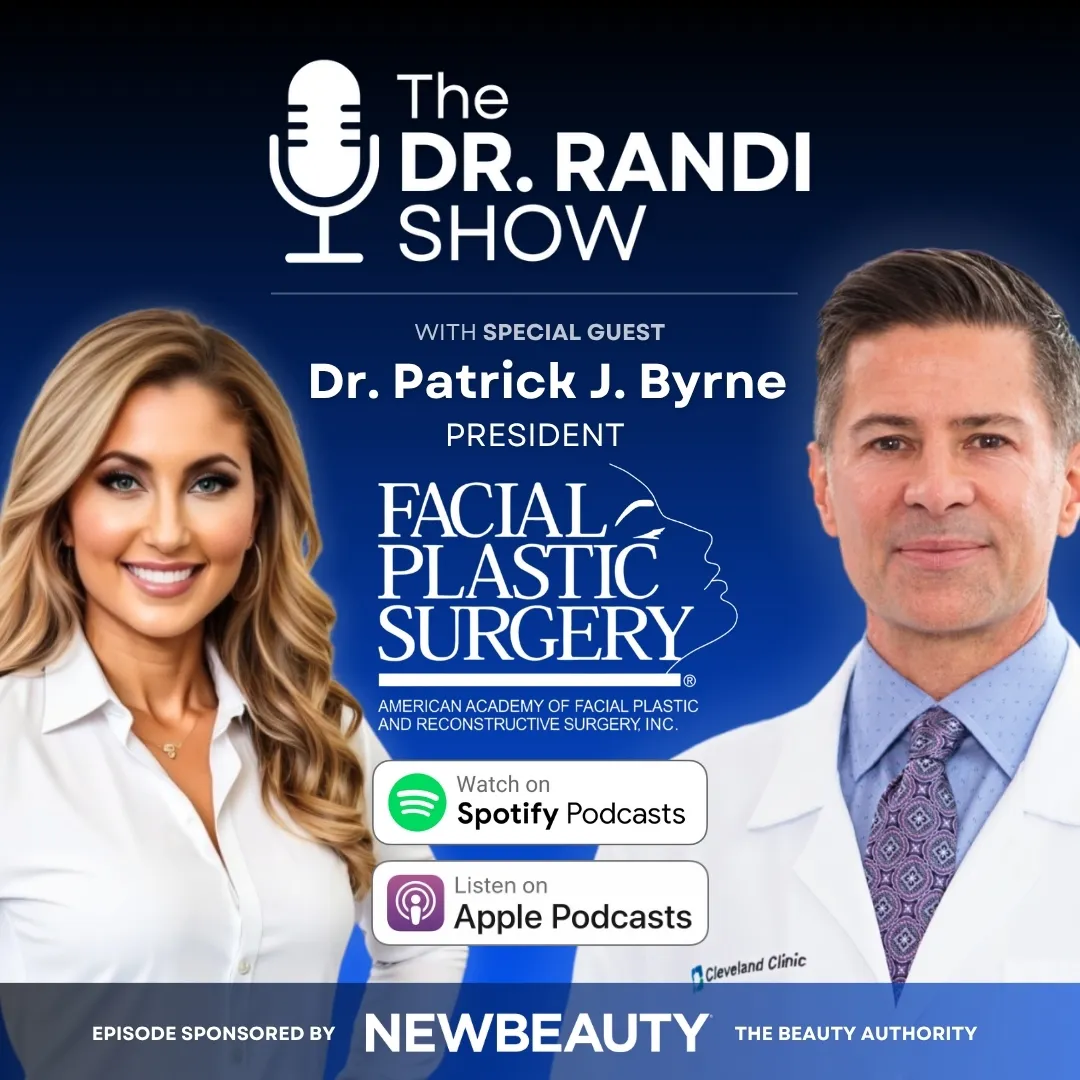
On the latest episode of The Dr. Randi Show, I sit down with Patrick J Byrne MD FACS MBA, President of the American Academy of Facial Plastic and Reconstructive Surgery (AAFPRS) and Chief of Cleveland Clinic Integrated Surgical Institute, to unpack the Academy’s newly released 2024 member survey—one of the most respected reports in the aesthetics industry.
Representing more than 2,200 board-certified facial plastic and reconstructive surgeons worldwide, the AAFPRS highlights a dramatic shift in patient behavior and treatment trends:
• 50% increase in fat grafting procedures as patients address “Ozempic Face”
• One in four surgeons expects GLP-1 medications to drive demand for fillers and skin tightening
• Facelift patients are skewing younger, with a growing segment aged 35–55
• Nearly 30% of surgeons report patients citing menopause as a reason for facial rejuvenation
• And 57% say regenerative medicine will define the next era in aesthetics
We also cover the rise in male procedures, the demand for natural results, and why choosing an experienced, board-certified facial plastic surgeon is more critical than ever.
The numbers speak volumes—this episode brings them to life.
Listen here:
🎧 https://spti.fi/WQ0CmBN
🎧https://apple.co/3Rm8O3y
Episode FAQ
What did this episode of The Dr. Randi Show cover about the future of facial plastic surgery?
In this episode of The Dr. Randi Show, host Dr. Randi Boyette spoke with Dr. Patrick Byrne, a facial plastic surgeon who, at the time of recording, was president of the American Academy of Facial Plastic and Reconstructive Surgery (AAFPRS) and a department chair at Cleveland Clinic in Ohio. Drawing on the academy’s annual member survey and more than two decades in practice, he discussed how GLP-1 weight loss medications are changing the face, why facelift patients are getting younger, how selfies shape self-image, the difference between fillers and collagen-stimulating injectables, the rise in male patients, where exosomes stand today, and how to choose the right surgeon. The answers below reflect his professional perspective and are not medical advice.
What is “Ozempic face,” and how are GLP-1 medications changing facial appearance?
On The Dr. Randi Show, Dr. Patrick Byrne explained that GLP-1 medications such as Ozempic and Wegovy have produced a surge of patients who lose a large amount of weight in a short period of time, which can change how the face looks. He compared it to what surgeons have long seen after bariatric surgery, now amplified by an order of magnitude. In his view, losing facial fat reduces the soft tissue volume that supports the skin, the skin sags more, and the combined effect can make people look older. He also noted potential concerns that weight loss on these medications may include muscle mass, not only fat. This reflects his professional perspective and is not medical advice.
What treatments help with facial volume loss and sagging after GLP-1 weight loss?
Dr. Patrick Byrne said on The Dr. Randi Show that both the volume loss and the sagging skin that can follow rapid weight loss are quite treatable in the hands of an expert clinician. He pointed to the academy’s annual member survey, which showed a meaningful increase in autologous fat transfer (fat injections using the patient’s own fat), and said the logical assumption is that the rise is related to the new class of weight loss medications. He described fat transfer, fillers, and surgery, primarily face and neck lifting and sometimes eyelid or brow lift surgery, as effective options, so patients can keep their weight loss and also enjoy a rejuvenated facial appearance. This reflects his professional perspective and is not medical advice.
Why are people getting facelifts at younger ages?
On The Dr. Randi Show, host Dr. Randi Boyette noted that the survey data she reviewed pointed to 54 as a typical facelift age, with some patients seeking one around 40. Dr. Patrick Byrne attributed the shift to two converging trends: people seeing their own faces in photos far more often since smartphones arrived, and a surge of innovation in facelift techniques that spreads rapidly among surgeons worldwide. He said today’s techniques look more natural, are more reliable, heal more quickly, and better conceal signs of surgery. He described two groups of younger patients: those who want to improve features such as a low brow or a jawline they never loved, and those in their late thirties who feel they are starting to look older, for whom earlier and sometimes less invasive intervention may make sense. This reflects his professional perspective and is not medical advice.
How do selfies and social media affect the way people see their own faces?
Dr. Patrick Byrne explained on The Dr. Randi Show that selfies tend to exaggerate imperfections, because the short focal length of smartphone cameras and the short length of an arm make certain features look disproportionate and worse than they appear in person. He believes constant exposure to one’s own image has driven more focus on facial appearance than at any time in history. He agreed with host Dr. Randi Boyette that comparing oneself to filtered images online can be harmful, and said he spends a lot of time helping patients stay grounded in reality, often reassuring them that they do not look nearly as bad as they think. He noted that improving self-image can involve surgery or minimally invasive treatment, but also simply rethinking how we see ourselves. This reflects his professional perspective and is not medical advice.
What is the difference between dermal filler and collagen-stimulating (biostimulatory) injectables?
On The Dr. Randi Show, Dr. Patrick Byrne said facial aging often seems to accelerate around menopause, and that the options for addressing it keep expanding, including energy devices such as ultrasound, radiofrequency, electromagnetic, laser, and intense pulsed light, along with bioactive injectables. He explained that a filler adds volume in a targeted way, either to soften hollowing and shadowing from sagging tissue and volume loss or to enhance contours associated with youth and beauty, while collagen-stimulating injectables work through the body’s own mechanisms to produce collagen and a thickening effect. He said both have a role, and the key is judicious, artful use by a practitioner with a good eye for aesthetics and detail. This reflects his professional perspective and is not medical advice.
Do fillers work the same for everyone, and when might someone need a different approach?
Dr. Patrick Byrne told The Dr. Randi Show that fillers can remain “magical” for some patients for a long time, while others, based on the characteristics of their skin and soft tissue, may reach a point where they look their best by easing off filler and considering other interventions. He said an amount of filler that looks natural on one person can look very strange on someone else of the same age, which makes aesthetics a highly bespoke field. He cautioned against blanket claims that fillers are either perfect or bad, and emphasized that anatomic knowledge and practitioner artistry matter greatly, noting that plastic surgery, facial plastic surgery, and dermatology all have world-class experts. This reflects his professional perspective and is not medical advice.
Why are more men getting facial cosmetic treatments and surgery?
Discussing the rise in male patients on The Dr. Randi Show, Dr. Patrick Byrne said men are influenced by the same trends as everyone else: seeing their own images more often and seeing impressive facelift outcomes on social media. He also pointed to a slow, steady increase in society’s comfort with men seeking help to look better, which he called a beautiful thing. He added that surgeons nationally and internationally keep improving through professional meetings, shared lectures, and detailed surgical videos online, and that tasteful, well-done results, including some celebrity examples, encourage more men to pursue treatment. This reflects his professional perspective and is not medical advice.
Are exosomes a proven aesthetic treatment?
On The Dr. Randi Show, Dr. Patrick Byrne called exosomes very exciting, describing them as tiny secretory vesicles produced by cells such as stem cells and loaded with bioactive agents like growth factors. He said the open questions are whether they work in humans, how to deliver them so they provide benefits, and what those benefits would be, and that in his view it is too early to draw any conclusions. He warned that the large aesthetics market also produces unjustified claims, such as promises of a “liquid facelift,” and advised finding a trusted provider who will be brutally honest about what is and is not possible. He said he relies on FDA-approved interventions that have stood the test of time. This reflects his professional perspective and is not medical advice.
How do you choose the right facial plastic surgeon for a first procedure?
Dr. Patrick Byrne advised on The Dr. Randi Show that the first step is board certification: a plastic surgeon certified by the American Board of Plastic Surgery, or a facial plastic surgeon typically certified by the American Board of Otolaryngology and the American Board of Facial Plastic and Reconstructive Surgery. Beyond that, he recommended looking for plenty of experience and, even more importantly, focused experience in the specific procedure, noting he would rather see a surgeon who performs a hundred rhinoplasties a year than one who performs three. He said to review before-and-after photos, calling a lack of photos a red flag, while cautioning that an impressive website does not guarantee experience. Finally, he stressed personal fit: choosing someone who listens, cares about you as an individual, and does not push their own agenda. This reflects his professional perspective and is not medical advice.