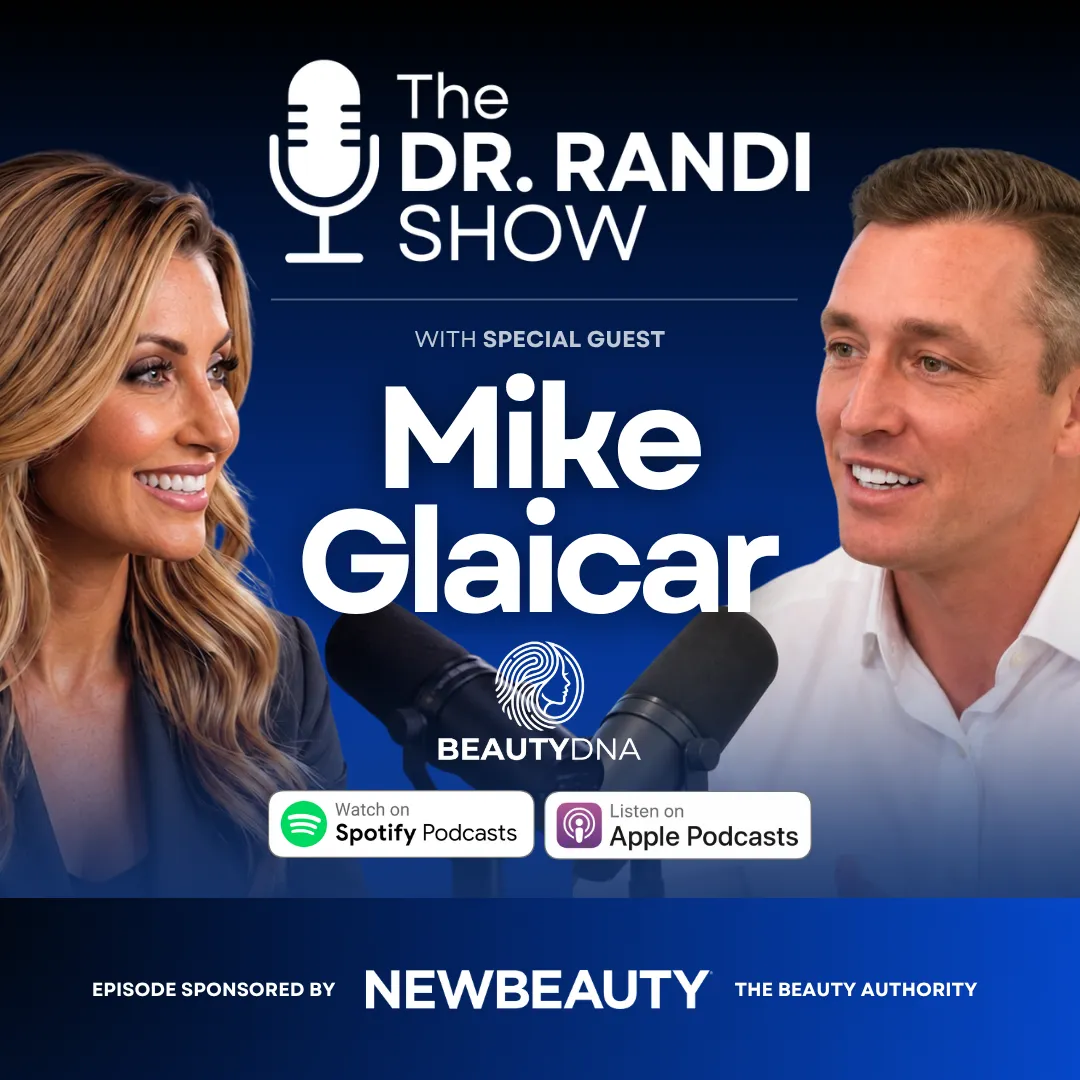
Millions of skincare products are competing for your attention. BeautyDNA wants to tell you which ones are right for your skin.
NewBeauty CEO Mike Glaicar returns to The Dr. Randi Show to introduce BeautyDNA, the AI-powered platform that could change how consumers discover, choose and buy skincare.
It begins with two photos: a selfie and a “shelfie.” BeautyDNA analyzes your skin, identifies every product in your current routine and learns your concerns and preferences. It then uses millions of reviews and beauty data points to match you with products specifically selected for you.
Mike shares what BeautyDNA is already uncovering about the way consumers use skincare, including the surprising number of routines missing SPF and the rapid rise of K-Beauty. He also explains how this data could influence product development, help brands reach the right consumers and eventually guide people to vetted providers for in-office treatments.
In this episode:
🔵 How BeautyDNA analyzes your skin using a selfie
🔵 Why your “shelfie” may reveal more than your skin
🔵 How AI identifies gaps in your current routine
🔵 Why K-Beauty is dominating consumers’ shelves
🔵 What BeautyDNA data could reveal to beauty brands
🔵 The future of one-to-one beauty recommendations
AI is turning skincare shopping from a costly cycle of trial and error into an experience built around the individual. BeautyDNA offers a first look at a future where your skin, not the latest trend, decides what belongs on your shelf.
Sponsored by NewBeauty💄
📱 Listen and Watch on Spotify: https://spti.fi/oXqmhL3
🎧 Listen Now on Apple: https://dub.sh/1uLjzMv
Episode FAQ
What is BeautyDNA and how does the AI skincare platform work?
In this episode of The Dr. Randi Show, NewBeauty CEO Mike Glaicar describes BeautyDNA as a web application that uses AI skin analysis to match each person with skincare products across any brand. According to Mike, a user takes a selfie so the technology can analyze their skin at the pixel level, then turns the camera around for what BeautyDNA calls a “shelfie,” a photo of their current routine that the AI reads to identify the products and ingredients they already use. From there, Mike says, BeautyDNA recommends products in every category and shows each one as a percentage match to that specific person, and because the platform is not tied to a single brand, it can suggest products from across the market.
What problem does BeautyDNA aim to solve for skincare shoppers?
On The Dr. Randi Show, Mike Glaicar explains that buying skincare has become confusing because there are so many products and so many marketing messages reaching consumers on platforms like TikTok and Instagram. He says the common pattern is that people buy products, dislike them, set them aside, and try something else, which adds up to a lot of money spent on products that were never a good match. Mike describes BeautyDNA as a way to shorten that trial-and-error process by starting a person further along, using reviews analyzed through BeautyEngine along with other data points to narrow the field before they buy. He notes that not every recommendation will be a perfect match, but the goal is to reduce the amount of trying and disliking that shoppers experience today.
What is a “shelfie” in BeautyDNA and why does it photograph your current products?
In this BeautyDNA episode of The Dr. Randi Show, Mike Glaicar explains that a “shelfie” is a photo of the products someone already uses, taken by turning the phone camera toward their skincare shelf. He says a person’s current routine reveals useful context, including their price point, so the platform can make more relevant suggestions rather than recommending a very expensive serum to someone using mostly budget products. According to Mike, the shelfie also helps BeautyDNA spot gaps in a routine, and identifying missing SPF was a common finding in testing. He adds that if someone has a “ride or die” product they love, the platform will not try to replace it, and will instead recommend products that align with it.
How does BeautyDNA’s AI analyze your skin from a selfie photo?
On The Dr. Randi Show, Mike Glaicar explains that BeautyDNA’s skin analysis works by reading individual pixels in a high-definition selfie, using technology from a San Francisco company that he says has completed more than six million face scans. According to Mike, the system learns from those scans along with self-reported concerns and purchasing habits, so when a new user’s skin shows pixel patterns similar to others in that large dataset, the platform can recommend the types of products likely to suit them. He notes that users also identify their own concerns and preferences, which helps refine the recommendations and reinforces the underlying model.
What did BeautyDNA’s beta test reveal about people’s skincare routines?
In this episode of The Dr. Randi Show, Mike Glaicar shares that BeautyDNA’s beta test began with NewBeauty readers, whom he describes as among the most educated beauty consumers. He says two findings stood out: many routines were missing SPF, which he sees as a clear opportunity to recommend the right sun protection, and a large amount of Korean skincare appeared in people’s routines, more than he says would have shown up a few years ago. According to Mike, several Korean brands that are popular on TikTok and other platforms ranked among the most used products in the shelfies.
Can BeautyDNA update its skincare recommendations as your skin changes over time?
On The Dr. Randi Show, Mike Glaicar says BeautyDNA is designed as a longitudinal tool rather than a one-time quiz, because skin goes through different phases. He explains that users can take a new selfie and a new shelfie at any point to update their data and adjust their routine. Mike adds that the platform leans on text messaging to remind people to refresh their selfie and shelfie and to share what they are currently using, so the recommendations stay current.
Where can you try BeautyDNA?
In this BeautyDNA episode of The Dr. Randi Show, Mike Glaicar points people to beautydna.com as the platform’s flagship website. He notes that BeautyDNA was still in beta at the time of the conversation and may be unlocked by the time the episode is released. According to Mike, users start by analyzing their skin with a selfie and can also self-report additional concerns and preferences, which both improves their recommendations and helps the AI become smarter over time.
How does BeautyDNA use consumer data with skincare brands and manufacturers?
On The Dr. Randi Show, Mike Glaicar explains that BeautyDNA gives its manufacturing partners a dashboard that shows product and routine trends in real time, which he says brands can use for research and development. He describes a proactive approach in which, once someone’s data is in the platform, BeautyDNA can text them when a new product is a strong match, for example a 95 percent match in the serum category. Mike also frames the long-term goal as one-to-one, targeted advertising, where brands reach their ideal customer and can offer that specific person an incentive to try a product, which he views as strategic marketing rather than broad discounting.
How could AI change the skincare and skin analysis experience over the next five years?
In this episode of The Dr. Randi Show, Mike Glaicar shares that many physicians have used skin analysis platforms for years and that AI has accelerated that shift, with most doctors he speaks to embracing it as a tool rather than pushing back. He is candid that the technology is not perfect and may never be, but he considers it very valuable for skin analysis and care. Mike also points to AI-based skin analysis being used to help identify skin cancers and other skin conditions, which he says is saving lives, while emphasizing that AI is a tool to support physicians, not a replacement for them.
What is next for BeautyDNA beyond skincare product recommendations?
On The Dr. Randi Show, Mike Glaicar says the future of BeautyDNA is meant to be holistic rather than limited to product recommendations. He explains that when a person has concerns that products alone cannot fully address, the goal is to connect them with vetted providers in their area for in-office treatments or procedures, closing the loop from recommendation to care. Mike also emphasizes community, describing a vision where BeautyDNA members interact with each other, brands build better products from the data, and, in his words, everybody wins.