What do patients want today, and how is that changing? We’re breaking down the latest trends, from the procedures people are asking for to the influences bringing them into the consultation room.
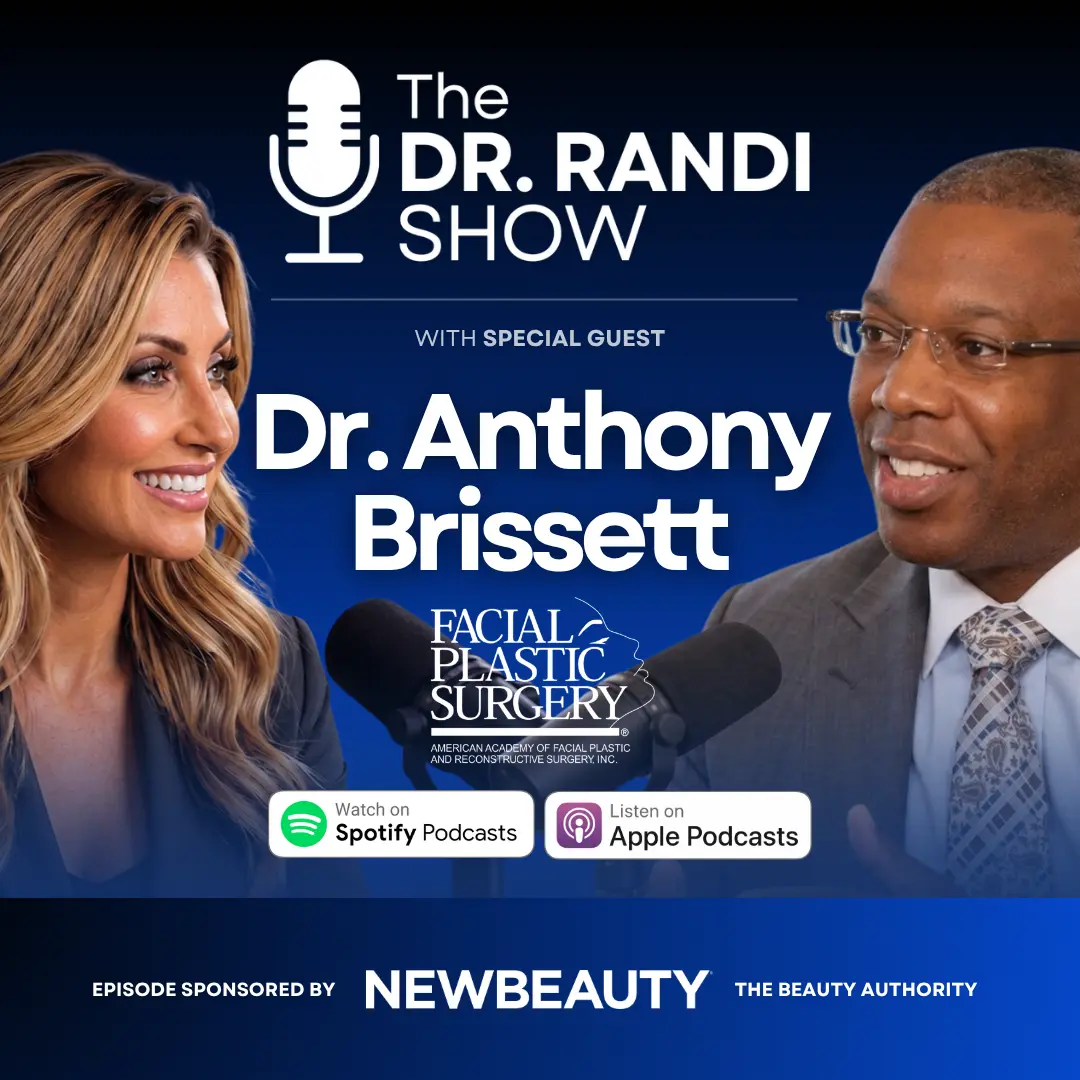
Dr. Anthony Brissett, president of the American Academy of Facial Plastic and Reconstructive Surgery and a double board-certified facial plastic surgeon, joins The Dr. Randi Show to share what the academy’s annual survey reveals about patient priorities and the future of aesthetics.
Celebrity transformations are driving conversations. Younger patients are exploring their options. Weight-loss medications and menopause are bringing new concerns into focus. And patients want to see a difference while still looking like themselves.
Dr. Brissett explains what’s behind these trends, how they’re showing up in clinic, and what patients should understand before deciding on a treatment.
In this episode:
• How celebrity transformations fueled interest in deep plane facelifts
• Why nearly three-quarters of surgeons predict facelift patients will keep getting younger
• Why 57% of surgeons reported an increase in patients under 30 requesting cosmetic surgery or injectables, and whether starting earlier means needing less later
• How weight-loss medications are influencing demand: 67% of surgeons identified patients seeking procedures because of these medications as a strong rising trend, up from 45% the previous year
• Fat grafting versus fillers and how to weigh the options
• The promise of peptides, PRP and exosomes, and where more evidence is needed
Plus, a candid speed round on everything from facelifts under 40 to recovery expectations and red light therapy.
Whether you’re considering a treatment or following what’s next in aesthetics, this conversation connects the latest findings with the questions patients are asking every day.
Sponsored by NewBeauty 💄
📱 Watch and Listen on Spotify: https://spti.fi/mlqm8Zr
🎧 Listen on Apple Podcasts: https://dub.sh/4NYWci5
Episode FAQ
What are the latest trends in facial plastic surgery from the AAFPRS annual survey?
On The Dr. Randi Show, Dr. Anthony Brissett, a double board-certified facial plastic surgeon at Houston Methodist Hospital in Houston, Texas, and president of the American Academy of Facial Plastic and Reconstructive Surgery (AAFPRS), walked through the academy’s latest annual survey of its members. Findings discussed on the episode include looking unnatural ranking as patients’ leading concern, ahead of finding the right doctor and cost; rising demand driven by celebrity transformations, weight loss medications, and menopause; predictions that facelift patients will get younger; and growing interest in regenerative medicine. Dr. Brissett, who describes his practice as the three Rs of rejuvenation, rhinoplasty, and reconstruction, shared his perspective on each trend. This reflects Dr. Brissett’s professional experience and is not medical advice.
How can you get natural-looking results from facial plastic surgery, and what should you ask in a consultation?
On The Dr. Randi Show, Dr. Anthony Brissett said that across rhinoplasty, rejuvenation, and both office-based and surgical procedures, he sees a trend toward preservation and away from transformation. He advised patients to get a good understanding of a surgeon’s aesthetic sense during consultations, be clear about their own goals and expectations, and make sure those goals align with the surgeon’s. As he put it, the best plastic surgery should not announce itself when it walks in the door. He said patients want to look fresh, youthful, and rested without looking tight, done, or outside of their ethnic characteristics. In the speed round, he added that patients tend to worry more about downtime than pain, and that many are overwhelmed by how long recovery takes. This reflects Dr. Brissett’s professional experience and is not medical advice.
How do you choose the right facial plastic surgeon, and what should you look for in before and after photos?
On The Dr. Randi Show, Dr. Anthony Brissett noted that finding the right doctor ranked almost even with looking unnatural as a top patient concern in the academy’s survey. He said before and after photos are one way to judge whether a surgeon’s outcomes and aesthetic sense match your expectations, and that reviews and referrals from friends or other patients can also help. Once in the consultation, he suggested paying attention not only to what a surgeon recommends but also to what they would advise against, since knowing what not to do can be just as important for a natural result. In closing, he encouraged listeners to trust their face to a facial plastic surgeon. This reflects Dr. Brissett’s professional experience and is not medical advice.
How are celebrity transformations and social media influencing cosmetic surgery requests?
On The Dr. Randi Show, Dr. Anthony Brissett discussed the survey finding that 35 percent of surgeons saw patients requesting procedures celebrities have had as a strong, rising trend. He credited celebrities, content creators, and social media with raising awareness and starting the conversation, and said he welcomes those references because they help him understand a patient’s starting point. He pointed to the deep plane facelift as an example, saying it gained mainstream attention after a highly publicized facelift in the Kardashian family, and that patients now regularly ask whether they will be having an extended deep plane facelift, something he said did not happen five to seven years ago. In the speed round, he said profile photos of noses are the screenshots patients bring in most often. This reflects Dr. Brissett’s professional experience and is not medical advice.
Are facelift patients getting younger, and what is the right age for a first facelift?
On The Dr. Randi Show, Dr. Anthony Brissett discussed survey findings that nearly three quarters of surgeons predict facelift patients will get younger, even though most are still 56 and older. He described a shift toward prevention, with some patients starting Botox in their 20s, and said surgeons can follow patients over time, moving from in-office and nonsurgical treatments to a facelift when those are no longer enough. In his view, starting early does not necessarily mean needing less later, but it may help patients stay refreshed longer until a lift is needed. He said a facelift can turn the clock back 10 to 15 years, but the clock starts ticking again once the last stitch is in. In the speed round, he said facelifts under 40 are in for the right patient, and that combination surgery is much more common than single procedures in his practice because aging does not happen in a vacuum. This reflects Dr. Brissett’s professional experience and is not medical advice.
When is preventative cosmetic treatment appropriate for people under 30, and when should a surgeon say no?
On The Dr. Randi Show, Dr. Anthony Brissett addressed the survey finding that 57 percent of surgeons reported an increase in patients under 30 requesting cosmetic surgery or injectables. He said surgeons must use their judgment and expertise to understand each patient’s goals. For a patient of 17 or 18 who is unhappy with their nose, for example, he said he checks for maturity, and that a change may give that person a better life experience. For a younger person focused on aging concerns that may not have a significant impact, he said the surgeon sometimes needs to be the guardian of reality and keep the patient safe. He shared that he has never been unhappy saying no, but has occasionally regretted saying yes when it should have been a no. This reflects Dr. Brissett’s professional experience and is not medical advice.
What can you do about facial changes after weight loss from GLP-1 medications?
On The Dr. Randi Show, Dr. Anthony Brissett discussed the survey finding that 67 percent of surgeons identified patients seeking procedures because of weight loss medications as a strong, rising trend, up from 45 percent the year before. He emphasized that there is not yet much evidence, and said his lab is developing grading scales to measure facial weight loss and how it affects the way people are perceived. He compared the changes to the facial fat changes once seen in some patients taking HIV protease inhibitors, for which he helped develop early grading scales. He said adding volume and addressing laxity can sometimes help, though fat grafting may not last as long in patients on GLP-1 medications. While patients are still losing weight, he said skincare and some energy-based treatments may offer modest results, but he prefers patients reach a stable weight before surgery for the most predictable outcomes. This reflects Dr. Brissett’s professional experience and is not medical advice.
Is fat grafting or filler better for restoring facial volume?
On The Dr. Randi Show, Dr. Anthony Brissett said there are advantages to both, so the choice comes down to which is best for each patient. He noted that most people have plenty of fat available, but fat grafting requires harvesting and processing, and its longevity is not certain. Depending on the studies and techniques, he cited a range of 50 to 70 percent for fat longevity and resorption, so patients may be slightly overtreated and may need additional treatments. He called hyaluronic acid fillers fantastic, explaining that the variety of fillers available, with different levels of flexibility and stiffness, can treat different layers of the skin. This reflects Dr. Brissett’s professional experience and is not medical advice.
How does menopause affect facial aging, and what can help?
On The Dr. Randi Show, Dr. Anthony Brissett discussed the survey finding that 45 percent of surgeons identified women citing menopause or perimenopause as a strong, rising trend for consultations, up from 28 percent the previous year. He described what he sees as accelerated facial aging, noting that a patient he has not seen in two years can look like a completely different person. He said little is known or written about how menopause, osteopenia, and osteoporosis affect the face, and that his lab is studying it using MRI for soft tissue changes, CT for bone changes, and DEXA scans. Rather than jumping to a treatment, he said he focuses first on understanding what is happening in the body, bringing together a team that may include endocrinologists, gynecologists, internists, and wellness doctors, and then building a holistic plan in which facial rejuvenation is often one part. This reflects Dr. Brissett’s professional experience and is not medical advice.
Do regenerative treatments like PRP, peptides, exosomes, and red light therapy work?
On The Dr. Randi Show, Dr. Anthony Brissett discussed the survey finding that 53 percent of surgeons chose regenerative medicine as one of their top predictions for the future of facial plastic surgery. He said treatments such as PRP, stem cells, peptides, and NAD all show promise, but cautioned that innovation without evidence is just enthusiasm, and that his research aims to match the two. He said he is especially excited about peptides as regulations and FDA involvement develop. He described exosomes as promising but said he is holding out until there is more evidence. In the speed round, he called red light therapy both a fad and a favorite and gave it two thumbs up. He also credited academy colleague Dr. Steven Dayan as a leader who thinks and writes about this area. This reflects Dr. Brissett’s professional experience and is not medical advice.