What if AI could show you how you’ll look after plastic surgery? Could an injectable last five years? And which of today’s most talked-about wellness treatments are backed by real science?
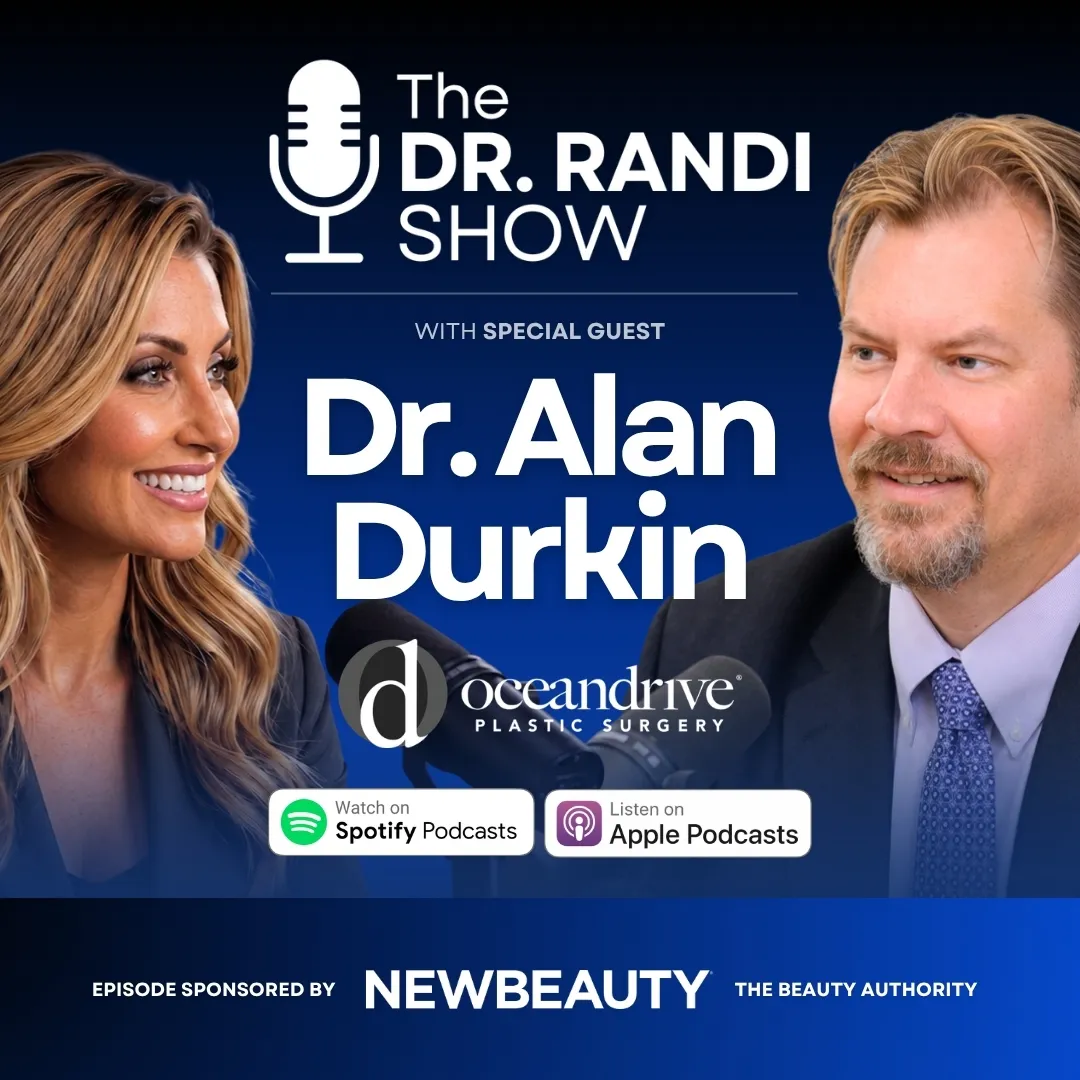
On this episode of The Dr. Randi Show, Dr. Randi Boyette sits down with nationally recognized plastic surgeon, educator, researcher, and innovator Dr. Alan Durkin for a wide-ranging conversation about what could reshape aesthetics, plastic surgery, and wellness.
Dr. Durkin reveals why the next generation of biologic injectables could challenge traditional fillers, what longer-lasting neuromodulators could mean for patients, and how AI may soon transform surgical consultations by creating more accurate previews of potential results.
They discuss:
- The five-year injectable that could change the future of fillers
- A neuromodulator that could last up to a year
- The scientific scrutiny that could eliminate more than half of today’s peptides
- How to tell which aesthetic technologies have staying power and which will disappear
- AI-generated plastic surgery previews and what they could mean for consultations
- His surprising ratings of today’s biggest aesthetic and wellness trends, ranging from 12 out of 10 to zero
Dr. Durkin also gives his unfiltered take on hormone optimization, NAD+, red light therapy, IV nutrients, and more, separating the developments with real potential from those driven more by marketing than science.
The episode also marks Dr. Durkin’s introduction as a founding member of The Dr. Randi Show Expert Council, where he will help bring greater clarity, credible science, and trusted physician insight to the conversations shaping the future of the field.
📱 Listen & Watch on Spotify: https://spti.fi/w2T1RUc
🎧 Listen on Apple Podcasts: https://dub.sh/Vs7MDYI
Sponsored by NewBeauty 💄
Episode FAQ
What does this episode of The Dr. Randi Show cover about innovation in aesthetic medicine and wellness?
In this episode of The Dr. Randi Show, host Dr. Randi Boyette speaks with plastic surgeon Dr. Alan Durkin, founder of Ocean Drive Plastic Surgery in Vero Beach, Florida, about where aesthetic medicine and wellness are heading. Alan shares how his practice blends its reconstructive roots with a med spa model to offer concierge-level care, and the conversation moves through how he evaluates new technology, why longevity and wellness are merging with aesthetics, the future of neuromodulators, fillers, biologics, and energy-based collagen treatments, patient safety and education, and the growing role of AI. The views reflect the guest’s personal experience and professional opinions shared on the show.
How does a plastic surgeon decide whether to adopt a new aesthetic technology or device?
On The Dr. Randi Show, the guest, Dr. Alan Durkin, described a layered process for bringing on a new technology. First it goes through clinical evaluation to confirm it is safe and solves a real problem. Next comes workflow: whether it fits the practice and, just as importantly, whether the staff who would champion it are bought in, since he considers his team his most potent asset. Only then does he weigh the business case. He also shared that he judges a technology by how often patients return for it rather than by how quickly the device pays for itself, giving the example of a laser in his practice with a high repeat rate within twelve months. This reflects his personal approach and is not medical advice.
Why are longevity and wellness becoming a bigger part of aesthetic medicine?
The guest on The Dr. Randi Show, Dr. Alan Durkin, framed the merging of longevity and wellness with aesthetics as long overdue. In his view, surgery works on the exterior, or what he calls the paint job, while wellness tools can influence the body’s underlying engine by helping create muscle, fat, and collagen without an operation. He sees this as expanding aesthetic medicine into a full spectrum that runs from biochemical and needle-based approaches through energy-based devices to surgery. These are the guest’s personal opinions shared on the show, not universal outcomes or medical advice.
What role do GLP-1 medications and peptides play in aesthetics, and where are they headed?
On The Dr. Randi Show, the guest, Dr. Alan Durkin, explained that GLP-1 medications have existed since around 2007 but became far more practical once a form-stable version allowed once-weekly injection instead of dosing multiple times a day. He noted that aesthetics is somewhat unique in using GLP-1s to increase a patient’s opportunities and interventions, whereas other specialties often use them to reduce interventions. Looking ahead, he expects regulation and a stronger demand for human data, predicting that of the many commercially available peptides only a portion will be validated and endure, while the overall market grows even as the field narrows. He shared these as personal predictions, not medical advice, and outcomes vary by individual.
What is the future of neuromodulators and neurotoxins in aesthetics?
The guest on The Dr. Randi Show, Dr. Alan Durkin, said the holy grail for neuromodulators is longer duration. He suggested that a neurotoxin offering durable results at six or even nine months would meaningfully change the field and push practitioners to become better, more precise injectors rather than less skilled ones. He also shared that he does not expect these products to get much cheaper, but rather to last longer. This reflects the guest’s personal outlook shared on the show and is not medical advice.
What is next for fillers and injectable biologics?
On The Dr. Randi Show, the guest, Dr. Alan Durkin, shared that he sees the future of fillers in biologics. He credited hyaluronic acid fillers as a major leap forward, while suggesting patients will gravitate toward longer-lasting options that also support collagen and other tissue benefits at a similar price. He pointed to Renuva, an acellular adipose matrix, as an example of a longer-lasting biologic, and mentioned an emerging injectable biologic he referred to as DermaClae from Tiger Aesthetics, which he expects could offer multi-year results. He added that longer-lasting products will require even stronger anatomy knowledge from injectors. These are the guest’s personal views, not medical claims, and individual results vary.
How can energy-based devices and treatments stimulate collagen after procedures like a facelift?
The guest on The Dr. Randi Show, Dr. Alan Durkin, described how, once a facelift is complete, his focus shifts to skin quality and building type one collagen and elastin. He shared that this can be approached non-surgically through options such as lasers, microneedling, cryotherapy, ultrasound, peptides, and injectables, and referenced newer facials and devices that aim to stimulate collagen with less downtime than older lasers. He also noted that reducing recovery time has made patients more likely to return for these treatments. This reflects the guest’s personal experience and is not medical advice.
What are the biggest safety concerns and misconceptions around peptides, GLPs, and aesthetic treatments?
On The Dr. Randi Show, the guest, Dr. Alan Durkin, cautioned that marketing has outpaced the science in this space and that the goal should be getting accurate, validated information into patients’ hands. For aesthetics specifically, he framed the real concern as anatomy, especially with injectables. He encouraged patients to seek credible sources, noting that resources like PubMed through the National Institutes of Health are freely available, and observed that patients are arriving far better informed than they were a decade ago. He shared these as personal perspectives on safety and education, not medical advice.
How is AI changing aesthetic medicine and patient consultations?
The guest on The Dr. Randi Show, Dr. Alan Durkin, shared that he sees artificial intelligence as a shift that could change how aesthetic care is delivered and how consultations happen. He described a patient who used an AI platform to generate a realistic simulation of possible results, and said a tool designed to educate rather than to sell would be valuable in his practice. He also expects AI to enter the treatment arena itself, though whether it acts as the lead or a co-pilot remains to be seen. These are the guest’s personal opinions shared on the show and not medical advice.
What treatments and wellness trends does the guest rate highly, and which is he skeptical of?
In the show’s speed round, the guest, Dr. Alan Durkin, shared personal ratings on a scale where ten means very bullish. He rated regenerative medicine and biostimulators above ten, and gave high marks to hormone optimization, peptides, red light therapy done consistently, genetic testing for risk reduction, full body MRI screening, intermittent fasting done consistently, and functional medicine in its truest form. He was more skeptical of IV nutrient therapy for routine use, gut microbiome testing, NAD plus therapy, high dose vitamin C outside specific cases, and oral collagen supplements as they exist today. These are the guest’s personal opinions shared on the show, not endorsements or medical advice, and individual results vary.
The answers on this page reflect one guest’s personal experience and professional opinions shared on The Dr. Randi Show. They are not medical advice. Individual results vary, and you should consult a qualified provider about your own care.