Episode FAQ
What is hair follicle stem cell banking, and why are people considering it?
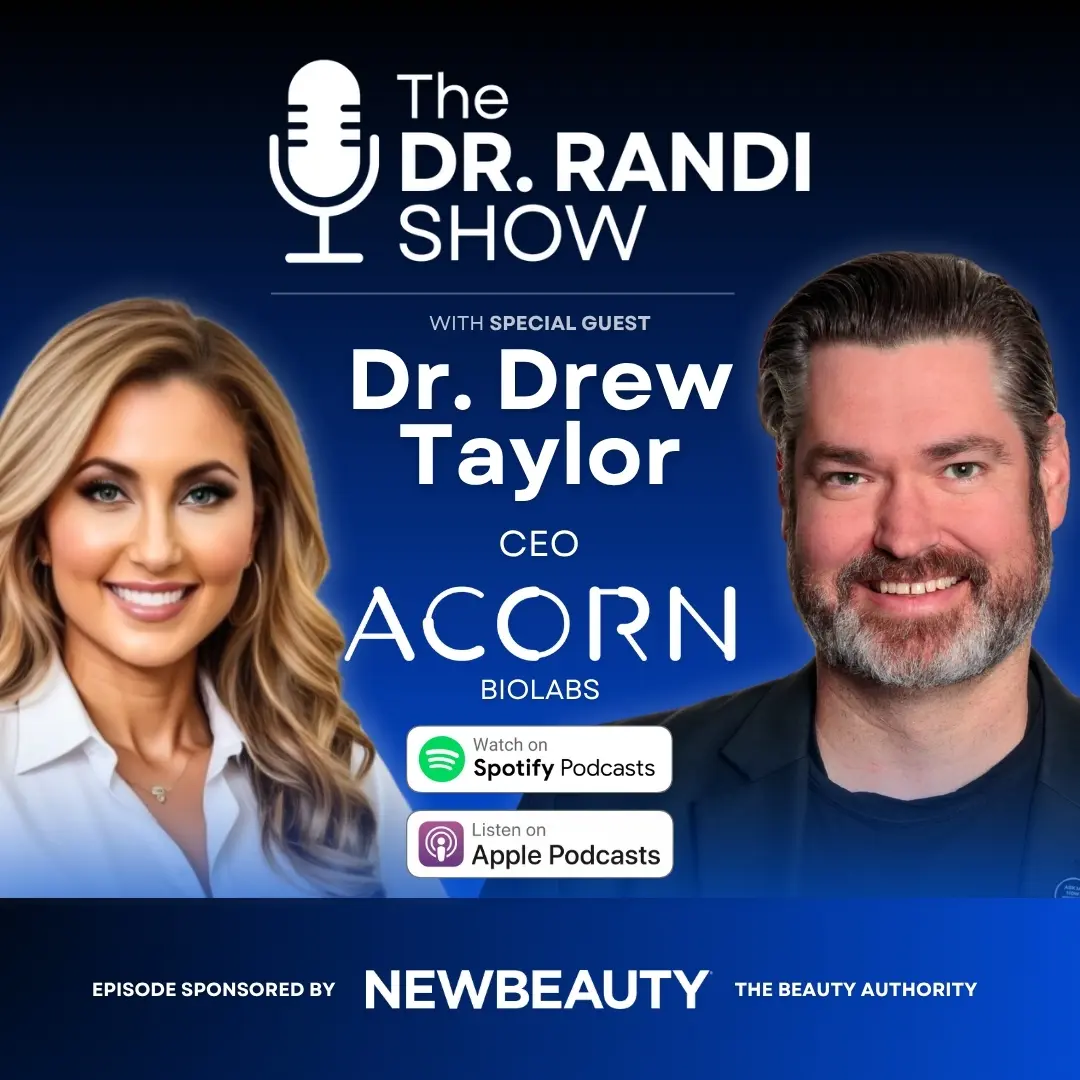
On The Dr. Randi Show, Dr. Drew Taylor, CEO of Acorn Biolabs, a former professional baseball pitcher who holds a PhD in biomedical engineering, explained how his company cryogenically preserves stem cells collected from a person’s own hair follicles. Dr. Taylor discussed why our cells, including our stem cells, become less efficient with age, why he sees the hair follicle as an ideal and noninvasive cell source, how banked cells are already being used in aesthetic treatments, and the future regenerative medicine uses his team is researching. He also covered how banking compares to cord blood and donor-derived products, why he believes using your own cells matters, and how people can get started through partner clinics. This reflects Dr. Taylor’s professional perspective and is not medical advice.
How does freezing stem cells work, and does it stop cells from aging?
On The Dr. Randi Show, Dr. Drew Taylor explained that as we age, our stem cells, which he describes as repositories for renewal and replenishment, become less efficient at supporting the cells around the body. Acorn Biolabs freezes cells in liquid nitrogen at about negative 310 degrees Fahrenheit, a temperature at which, according to Dr. Taylor, cells do not metabolize or age. In his view, cryopreservation is the only true way to stop the aging process of those specific cells, preserving them at the age they were frozen. He noted that cell freezing technology has been developing since the 1960s and said there is theoretically no expiration on properly preserved cells. This reflects Dr. Taylor’s professional perspective and is not medical advice.
Why use hair follicles instead of bone marrow or fat for stem cell banking?
On The Dr. Randi Show, Dr. Drew Taylor explained that bone marrow, fat, and hair follicles all contain mesenchymal stem cells, which scientists value because they are robust and can become many different cell types. He said harvesting bone marrow from the hip is not a minor procedure, and most people are not planning a liposuction or fat retrieval procedure. He added that stem cells in fat are dispersed among oil-based fat cells, while the cryoprotectants used to freeze cells are water soluble, which in his view makes fat harder to freeze efficiently. Dr. Taylor said researchers discovered high concentrations of similar stem cells in hair follicles within the last decade, and that collecting them is noninvasive and possible at almost any age, which is why he considers the hair follicle an ideal cell source. This reflects Dr. Taylor’s professional perspective and is not medical advice.
What is a secretome, and how are banked hair follicle cells used in skincare and aesthetic treatments?
On The Dr. Randi Show, Dr. Drew Taylor described the first available use for banked hair follicle cells. Acorn Biolabs grows a patient’s own cells in its laboratory and collects everything the cells release as they grow, which he called the secretome. According to Dr. Taylor, this includes matrix molecules such as collagen, elastin, and fibronectin, growth factors such as PDGF, IGF-1, and VEGF, and exosomes. The secretome is then bottled and returned to a physician, who can apply it alongside procedures that enhance absorption, such as microneedling and laser treatments, or apply it topically. Dr. Taylor sees this as a way for patients to get value from their banked cells right away. This reflects Dr. Taylor’s professional perspective and is not medical advice.
What future medical uses are being researched for hair follicle stem cells?
On The Dr. Randi Show, Dr. Drew Taylor said Acorn Biolabs has ongoing research that has turned hair follicle cells into cartilage, bone, fat, pancreatic cells, and natural killer (NK) cells, which are part of the immune system. He described a collaboration with the University of Guelph that has created neurons, including dopaminergic neurons, the type lost in Parkinson’s disease. He also mentioned studies evaluating the approach in orthopedics and sports medicine, along with preclinical work in internal medicine. Dr. Taylor was especially excited about NK cells, which he said decline with age and help clear senescent and precancerous cells. He was clear that these are research areas, and his hope is that over the next 10 years they will expand the ways people benefit from their banked cells. This reflects Dr. Taylor’s professional perspective and is not medical advice.
How is hair follicle stem cell banking different from cord blood banking?
On The Dr. Randi Show, Dr. Drew Taylor used a mountain analogy to explain cell types. Specialized cells that do a single job, such as kidney, liver, or skin cells, sit at the bottom, while stem cells sit higher up and can roll down different paths to become different cell types. He said pockets of these stem cells exist in bone marrow, fat, hair follicles, and at birth in cord blood and Wharton’s jelly. In Dr. Taylor’s view, the key difference is timing and access: cord blood can only be collected at birth, while hair follicle cells can be collected at almost any age, giving far more people the opportunity to bank their own cells. This reflects Dr. Taylor’s professional perspective and is not medical advice.
Why does it matter whether regenerative aesthetic treatments use your own cells or donor cells?
On The Dr. Randi Show, Dr. Drew Taylor said the central ethical question in cellular medicine is procurement, or where cells come from. Topical regenerative aesthetic products can be derived from plants, animals, or human donors, and he raised questions about possible disease transfer, whether the body recognizes those materials as foreign, and what genetic material they may carry. He also said that growing a single donor sample into thousands of vials can change the cells, and pointed to published research from the last five years suggesting that over-cultured cells, and the exosomes they release, can lose value. Because Acorn Biolabs works only with a patient’s own cells, Dr. Taylor said the source is known, consent is clear, and the patient knows how the cells will be used. He believes this will matter even more as cell delivery becomes more invasive. This reflects Dr. Taylor’s professional perspective and is not medical advice.
Why bank your stem cells now instead of waiting?
On The Dr. Randi Show, Dr. Drew Taylor compared regenerative medicine to the early days of flight. He noted that it took the better part of four decades after the Wright brothers’ first flight for air travel to carry passengers across the Atlantic, but then supersonic flight and the moon landing followed within about 20 years. In his view, regenerative medicine is at an early stage and is likely to accelerate in a similar way. Since, as he put it, we are the youngest we will ever be today, he believes the best step is to preserve a younger version of your cells so they are ready for future advances. This reflects Dr. Taylor’s professional perspective and is not medical advice.
How do you bank hair follicle stem cells, and how much does it cost?
On The Dr. Randi Show, Dr. Drew Taylor explained that Acorn Biolabs works through partner dermatologists, plastic surgeons, and other physicians, and said the company is available in well over 100 practices across the United States and Canada. People can find a participating clinic on the company’s website, acorn.me, where they can have their cells banked and order their secretome at the same time. On cost, Dr. Taylor said the annual cost to keep cells banked is cheaper than a Netflix subscription, reflecting his goal of making banking an easy decision. Pricing and availability may change, so confirm details with a participating clinic. This reflects Dr. Taylor’s professional perspective and is not medical or financial advice.
Will stem cell banking become a standard part of healthcare?
On The Dr. Randi Show, Dr. Drew Taylor said he believes having access to your own cryopreserved cells will one day be a standard of care rather than a luxury. He noted that stem cell treatments have often been expensive and experimental, and that people have traveled outside the United States or Canada to countries with less developed safety protections to access them. His goal is to offer banking within established regulations and at an accessible cost. Dr. Taylor compared this to how egg freezing moved from seeming like science fiction to becoming widely accepted, and said he hopes to follow a similar path for regenerative medicine, starting with regenerative aesthetics and expanding into other areas of medicine. This reflects Dr. Taylor’s professional perspective and is not medical advice.
What if your hair follicles held the key to reversing aging, improving recovery, and unlocking the future of regenerative medicine? In this episode, Dr. Randi sits down with Drew Taylor—former professional athlete turned biotech innovator—who now leads Acorn Biolabs, the company redefining how we think about stem cell preservation.
With a quick, non-invasive procedure that takes under 30 minutes, trained technicians collect 50 hair follicles from the back of the scalp. These follicles contain some of the body’s most potent stem cells — and Acorn’s breakthrough is making it possible to preserve them at their peak, before age and environmental damage take their toll. The cells are analyzed for viability and then cryopreserved at -196°C, stopping the biological clock in its tracks.
Right now, these preserved cells are being used in aesthetic medicine to support personalized treatments like skin rejuvenation, secretome therapies, and post-procedure recovery. But what’s even more exciting is what’s coming next. As regenerative science evolves, these same cells could be used in future applications that go far beyond beauty — from musculoskeletal repair to tissue regeneration and more personalized approaches to wellness and longevity.
Dr. Taylor breaks down how this all works, why hair follicles are such a valuable stem cell source, and what this means for both practitioners and patients. With over 100 clinics already offering the service across North America, stem cell banking is no longer science fiction — it’s a real, accessible health decision anyone can make today.
Whether you’re in aesthetics, wellness, or just curious about what’s next in medicine, this episode offers a fascinating look at the intersection of beauty, biotech, and the future of personalized regenerative care.
This episode is sponsored by: NewBeauty 💄
🎧Listen Now on Apple: https://apple.co/45drSXY
📱 Listen and Watch here on Spotify: https://spti.fi/VXxz9Ny