Peptides have moved into the center of the conversation across health, aesthetics, and longevity.
This Special Report takes a closer look at what is driving that shift and what happens next.
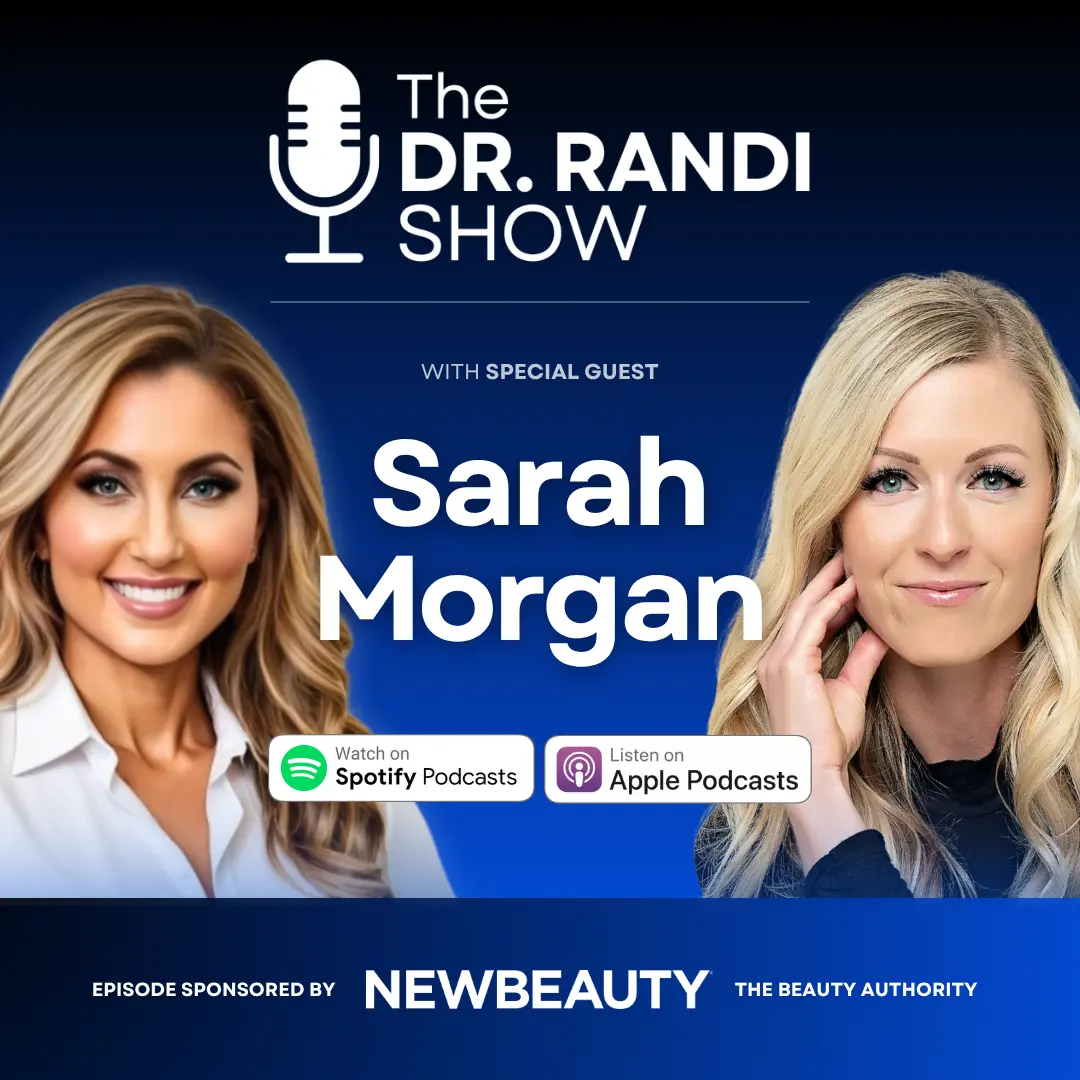
Dr. Randi is joined by Sarah Morgan, MS, Clinical Nutritionist, who brings over 20 years of experience working across peptides, hormones, and advanced nutrient therapies, including training practitioners and supporting clinical use at scale.
Together, they break down what is happening in real time. From the surge fueled by GLP-1 medications to the policy changes already underway, this conversation examines why peptides are rapidly becoming one of the most important and complex categories in modern medicine.
Inside the episode:
• What is driving demand across clinics and patients
• The latest FDA movement and what it signals going forward
• The peptides gaining traction right now including BPC-157, GHK-Cu, and MOTS-c and more…
• Where peptides fit across skin, hair, recovery, and metabolic health
• The reality behind microdosing GLP-1s
• The growing concerns around sourcing, quality, and safety
• What happens next as access expands and innovation accelerates
This episode does not just highlight the opportunity. It addresses the responsibility that comes with a category moving this quickly and why education will define who gets it right. With major regulatory decisions approaching and new delivery formats on the horizon, peptides are entering a new phase.
If you want a clear, informed view of where this is heading, this is the episode to watch.
Sponsored by NewBeauty 💄
📱 Listen and Watch on Spotify: https://spti.fi/1Bo25vt
🎧 Listen Now on Apple: https://dub.sh/Z4Mvxyd
Episode FAQ
What did the April 2026 episode of The Dr. Randi Show cover about peptides?
In this April 2026 news-style edition of The Dr. Randi Show, host Dr. Randi Boyette spoke with guest Sarah Morgan, who brings more than 20 years of experience across peptides, hormones, and nutrient therapies, about why peptides are moving into the mainstream. The conversation covered what is driving demand, a recent FDA policy shift around compounded peptides, how specific peptides are being used for skin, hair, tissue repair, energy, and immune support, and her views on safety, microdosing, and where the category is headed. The answers below reflect her personal experience and opinions and are not medical advice.
Why have peptides become so popular, and did GLP-1 medications drive the trend?
On this episode of The Dr. Randi Show, the guest said peptides took off because people feel the results and then want to learn more. She described peptides as mini proteins, or amino acid sequences the body naturally makes, whose production declines with age. In her view, GLP-1 medications were the gateway that introduced many people to the wider category, alongside a broader movement of people advocating for their own health and longevity. She noted that GLP-1 users often reported added benefits like clearer skin, less brain fog, and improved PCOS or autoimmune symptoms. This reflects her personal perspective and is not medical advice.
What FDA policy change around compounded peptides was announced in April 2026?
Recording in April 2026 on The Dr. Randi Show, the guest explained that the FDA had just removed several injectable peptides from its category two list, which flags safety concerns and limits distribution through compounding pharmacies. She said those peptides had not yet been moved to category one, the classification considered safer for compounding, and that the FDA had a committee meeting set for July 23 and 24, 2026 to review each peptide individually for possible reclassification. In her opinion, moving peptides to category one would drive major growth in the space. This reflects her understanding at the time of recording and is not medical or legal advice.
How is GHK-Cu, the copper peptide, used for skin, collagen, and hair?
The guest on The Dr. Randi Show highlighted GHK-Cu, often called the copper peptide, as one of the most popular options in the beauty space. She said it supports collagen and elastin production, which declines with age, and can improve skin appearance, texture, and tone, help with hyperpigmentation from sun damage or inflammation, and support hair follicle size and development. She noted that GHK-Cu regulates more than 4,000 genes and is being studied as an anti-cancer compound, and in the episode’s speed round she named it her top pick for skin quality, collagen stimulation, and hair growth. This reflects her personal and professional perspective and is not medical advice.
Which peptides did the guest recommend for tissue repair and post-procedure recovery?
On The Dr. Randi Show, the guest described BPC-157 (body protection compound) and TB-500, a shorter analog of Thymosin Beta-4, as the body’s handymen that go in and repair tendons, ligaments, muscle, bone, brain, and gut. She said many people now use them after aesthetic, plastic, or orthopedic procedures and surgery to recover faster, and she called the combination of BPC-157 and TB-500 “magic” for post-procedure healing. She also named BPC-157 her top choice for inflammation. This reflects her clinical experience and is not medical advice.
What are mitochondrial peptides like MOTS-c, and what does the guest say they do?
The guest on The Dr. Randi Show called mitochondrial peptides the “energy buddies” in our cells that decline with age and are central to healthy aging and longevity. She focused on MOTS-c, a peptide the body naturally produces in the mitochondria, describing it as an energy coach that helps mitochondria make ATP and then directs the body to use that energy for metabolic health, fat burning, and brain function. She also mentioned SS-31, which she said was recently FDA approved for Barth syndrome, and Humanin, and noted that pairing mitochondrial peptides with NAD can leave people feeling far more energized. This reflects her personal perspective and is not medical advice.
How is Thymosin Alpha-1 used for immune support, skin, and hair?
The guest named Thymosin Alpha-1 as one of her favorite peptides on The Dr. Randi Show and described it as an immune optimizer. She explained that many hair and skin issues are tied to immune dysregulation, so this immune-modulating peptide can be valuable for beauty as well as overall health. She noted that the immune system goes through a major aging event around age 60, and said she views a single roughly six-week cycle once a year as a strategy some use for long-term cancer prevention. She also called Thymosin Alpha-1 the most misunderstood peptide right now. This reflects her personal experience and is not medical advice.
Is Melanotan II, the tanning peptide, safe?
On The Dr. Randi Show, the guest confirmed that Melanotan II, sometimes called the “Barbie peptide,” does work on melanin to produce tanning. She cautioned strongly about safety, explaining that it can increase the risk of melanoma development and growth. She advised that anyone with a personal or family history of melanoma should be very careful with it, and she used it as an example of why screening and monitoring matter with peptide use. This reflects her personal opinion and is not medical advice.
What is GLP-1 microdosing, and what doses did the guest describe?
The guest on The Dr. Randi Show said GLP-1 microdosing is very real, and shared that she has personally microdosed a GLP-1 for about two and a half years for skin and gut issues. She defined a microdose as enough to get anti-inflammatory, immune-modulating, and brain benefits without losing weight or suppressing appetite. Speaking specifically about tirzepatide, she said a microdose might be as small as 500 micrograms, and even around 100 micrograms for some people, compared with a typical loading dose near 2.5 milligrams. She stressed that dosing varies from person to person and should be guided by a knowledgeable provider. This reflects her personal experience and is not medical advice.
What safety concerns and contraindications did the guest raise about peptides?
The guest on The Dr. Randi Show emphasized that real safety concerns can be overlooked amid the hype. She said secretagogues such as CJC-1295, Ipamorelin, and Sermorelin can trigger anaphylactic reactions in people with mast cell issues or high histamine, so those individuals need to be screened and dosed carefully, and she advised extra caution during allergy season. She also warned that some peptides are not safe for people with active cancer or in recent remission, and pointed to quality risks like endotoxins, heavy metals, and poor manufacturing. Her guidance was to screen, monitor, follow up, and source peptides from transparent, high-quality suppliers. This reflects her personal perspective and is not medical advice.