Did the FDA approve six new peptides? Not exactly. But one recent vote could have a major impact on where the industry goes from here.
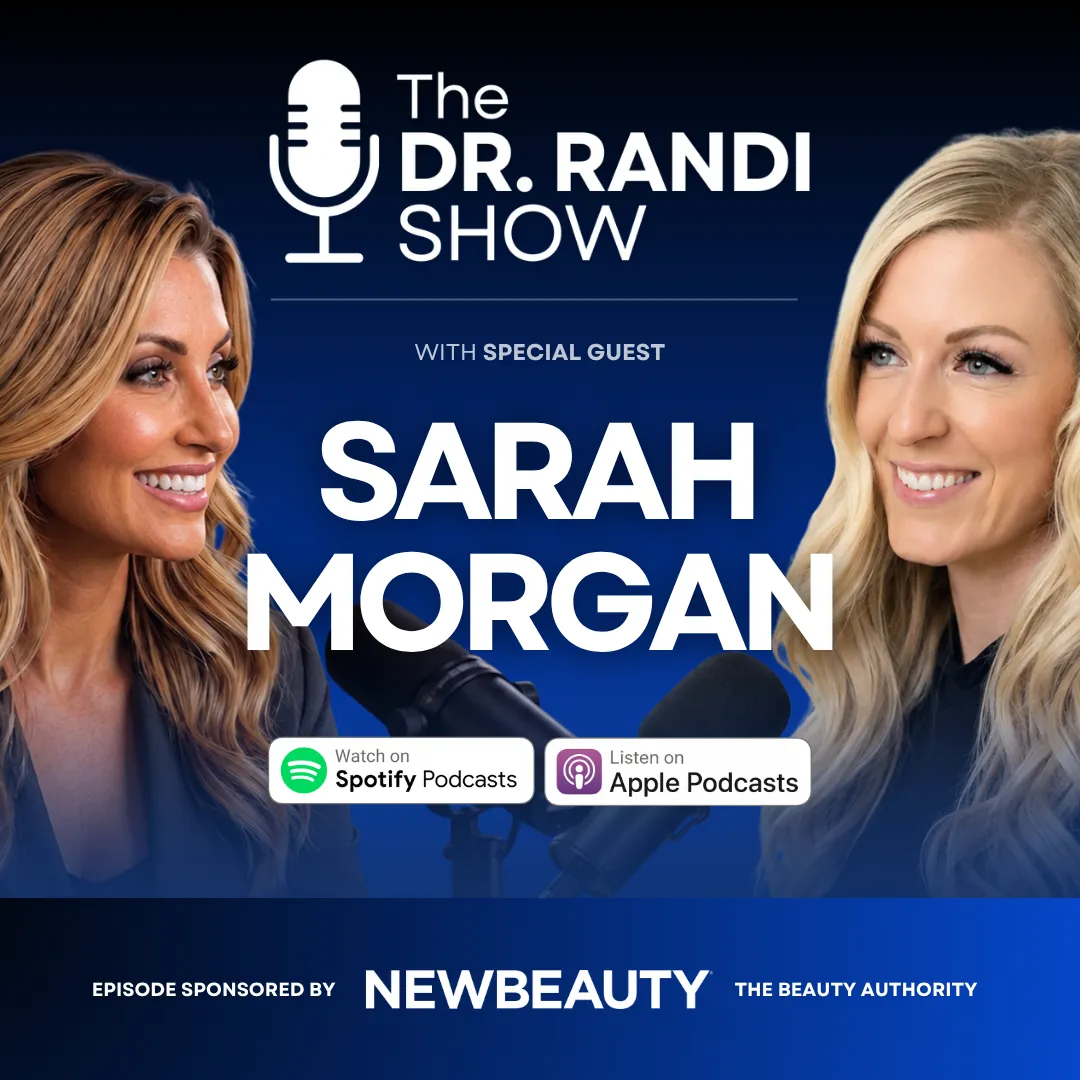
In this episode of The Dr. Randi Show, Dr. Randi Boyette welcomes peptide expert Sarah Morgan back to the show to explain one of the biggest regulatory developments the peptide industry has seen in years. Together, they separate fact from fiction surrounding the FDA’s recent Pharmacy Compounding Advisory Committee meeting, discuss what was actually recommended, and explain why this moment could help shape the future of peptides in aesthetics, wellness, and longevity.
They discuss:
- FDA recommendation vs. FDA approval
- What still must happen before access changes
- The six peptides and what they’re used for
- The latest updates on retatrutide
- What consumers should know about peptide sourcing
- Where peptides fit into beauty, wellness, and longevity
From regulatory updates and peptide safety to future access, longevity medicine, and the growing connection between wellness and aesthetics, this episode explains why the FDA’s latest actions have captured so much attention and what patients, providers, and the industry should be watching in the months ahead.
Sponsored by NewBeauty 💄
📱 Listen and Watch on Spotify: https://spti.fi/rWRVFxB
🎧 Listen Now on Apple: https://dub.sh/sYGHuWn
Episode FAQ
What happened at the FDA’s July 2026 peptide advisory committee meeting?
In this episode of The Dr. Randi Show, host Dr. Randi Boyette and peptide expert Sarah Morgan discuss the FDA Pharmacy Compounding Advisory Committee meeting held on July 23 and 24, 2026. According to Sarah Morgan, the committee reviewed seven peptides and recommended six of them for possible inclusion on the FDA’s 503A compounding list. She explains that this was a recommendation to the FDA, not FDA approval, and that access has not changed overnight. The guest describes it as a meaningful step toward more validation and potential access for peptides, while noting that the FDA still has to make its own decision.
Which peptides did the FDA’s Pharmacy Compounding Advisory Committee review in July 2026?
On this episode of The Dr. Randi Show, peptide expert Sarah Morgan reviews the seven peptides considered at the FDA’s July 2026 Pharmacy Compounding Advisory Committee meeting: BPC-157, TB-500, KPV, MOTS-c, Epitalon, Semax, and DSIP. She shares that six of the seven received a favorable recommendation vote, and that DSIP was the only one that did not make it. The guest notes that most votes were close, often splitting between clinicians with hands-on peptide experience and members from academic or regulatory backgrounds. She adds that another group of peptides is expected to be reviewed in February 2027.
Why did the advisory committee recommend six peptides when FDA staff had recommended against all seven?
On The Dr. Randi Show, Sarah Morgan explains why the advisory committee recommended six peptides even though FDA staff had recommended against all seven ahead of the meeting. She shares that peptide advocacy groups submitted extensive public documentation, including more than 80 pages and data on over 15 million prescribed doses of BPC-157, which she says the FDA committee acknowledged it had not reviewed beforehand. In her view, the FDA staff position reflected an older, more limited set of information. The guest also points to differing perspectives, noting that clinicians who see peptides work tend to favor access, while academic and regulatory members tend to want more complete data before saying yes.
What are BPC-157, TB-500, KPV, MOTS-c, Epitalon, and Semax used for?
In this episode of The Dr. Randi Show, Sarah Morgan gives a quick overview of the six recommended peptides based on her own experience in the field. She groups BPC-157 and TB-500 under healing and repair, and mentions benefits she associates with gut and brain support. She describes KPV as an option for immune modulation and inflammation, particularly for skin and gut, and MOTS-c as a mitochondrial peptide tied to energy, metabolism, and fat burning that is sometimes used alongside GLP medications. She characterizes Epitalon as a circadian rhythm and longevity peptide, and Semax as a brain-optimizing peptide linked to focus and, in some cases, stroke or traumatic brain injury recovery. The guest shares that DSIP, which was not recommended, is associated with sleep and circadian rhythm and has been used for opioid withdrawal. These reflect the guest’s personal perspective and are not medical advice.
Does the July 2026 FDA advisory vote mean peptides are now FDA approved?
On The Dr. Randi Show, Sarah Morgan addresses the common misconception that the FDA approved these peptides in July 2026. She is clear that this was a recommendation to the FDA, not FDA approval, and that the peptides are not yet allowed in compounding. The guest explains that moving a peptide toward Category 1 for 503A compounding is not the same as being an FDA-approved drug, and that the FDA retains full authority to say yes, no, or modify the recommendation.
What still needs to happen before peptide compounding access could change?
In this episode of The Dr. Randi Show, Sarah Morgan outlines what still needs to happen before peptide access could change. She estimates the process could take roughly 9 to 18 months. According to the guest, the FDA will review the data internally, including public submissions it had not examined earlier, while an infrastructure and regulatory framework to responsibly supply these peptides still needs to be built. She also emphasizes closing the knowledge gap, so that consumers and practitioners understand what peptides are, how they work, and how they apply to an individual’s health.
Why does this peptide regulatory update matter for beauty, skincare, and healthy aging?
On The Dr. Randi Show, Sarah Morgan explains why this peptide update matters for people interested in beauty, skincare, and healthy aging. She shares her view that skin health reflects overall body health, and that inflammation, gut health, and immune regulation are closely connected to how skin looks and how the body recovers. In the guest’s perspective, beauty is increasingly intersecting with wellness, and she describes peptides as powerful tools that can support goals related to beauty and aesthetics. She frames this as her personal, experience-based outlook rather than medical advice.
What is retatrutide and why is everyone talking about it?
In this episode of The Dr. Randi Show, Sarah Morgan discusses retatrutide, which she describes as a triple receptor agonist developed and patented by Eli Lilly. She explains that it builds on tirzepatide, a dual GLP-1 and GIP receptor agonist, by adding glucagon agonist activity, and that it has a backbone of 39 amino acids. According to the guest, Eli Lilly has completed phase three trials and is expected to pursue approval, potentially in the first quarter of 2027, with reporting suggesting they may seek to classify it as a biologic. She notes interest in retatrutide for areas beyond weight loss, such as cardiovascular health and sleep apnea, and shares that some people respond well to it while others do not. The guest refers to retatrutide as what some believe could be a trillion-dollar molecule, and this reflects her perspective rather than a guarantee of outcomes.
Is compounded retatrutide legal or FDA approved right now?
On The Dr. Randi Show, Sarah Morgan clarifies the current status of compounded retatrutide. She states that retatrutide is not actually allowed in compounding and is not FDA approved, so a compounding pharmacy distributing it would not be in compliance. The guest explains that while retatrutide is present in the market because its amino acid sequence is known and it is being synthesized, this is happening outside the approved process. She also notes that Eli Lilly is reportedly seeking a 12-year patent to protect it, and that if it is approved as a biologic, pharmacies without a biologic license would not be able to compound it.
How can consumers and providers find safe, high-quality peptides?
In this episode of The Dr. Randi Show, Sarah Morgan offers guidance on finding safe, high-quality peptides. She encourages consumers and providers to proceed with caution and to know exactly where their peptides come from. According to the guest, some manufacturers use sterile clean rooms and good manufacturing practices even though they have not been officially credentialed, while other sellers enter the space without real expertise, which can leave buyers unsure of what they are getting. She recommends choosing suppliers with knowledgeable people behind them who can answer technical questions and who perform proper laboratory analysis, and she mentions that greater standardization of laboratory testing is an area she is actively working on. This reflects the guest’s personal experience and is not medical advice.