Is the “Instagram Face” era officially over? The aesthetic industry is changing, and one of the world’s most recognized facial plastic surgeons says patients are no longer chasing the same look.
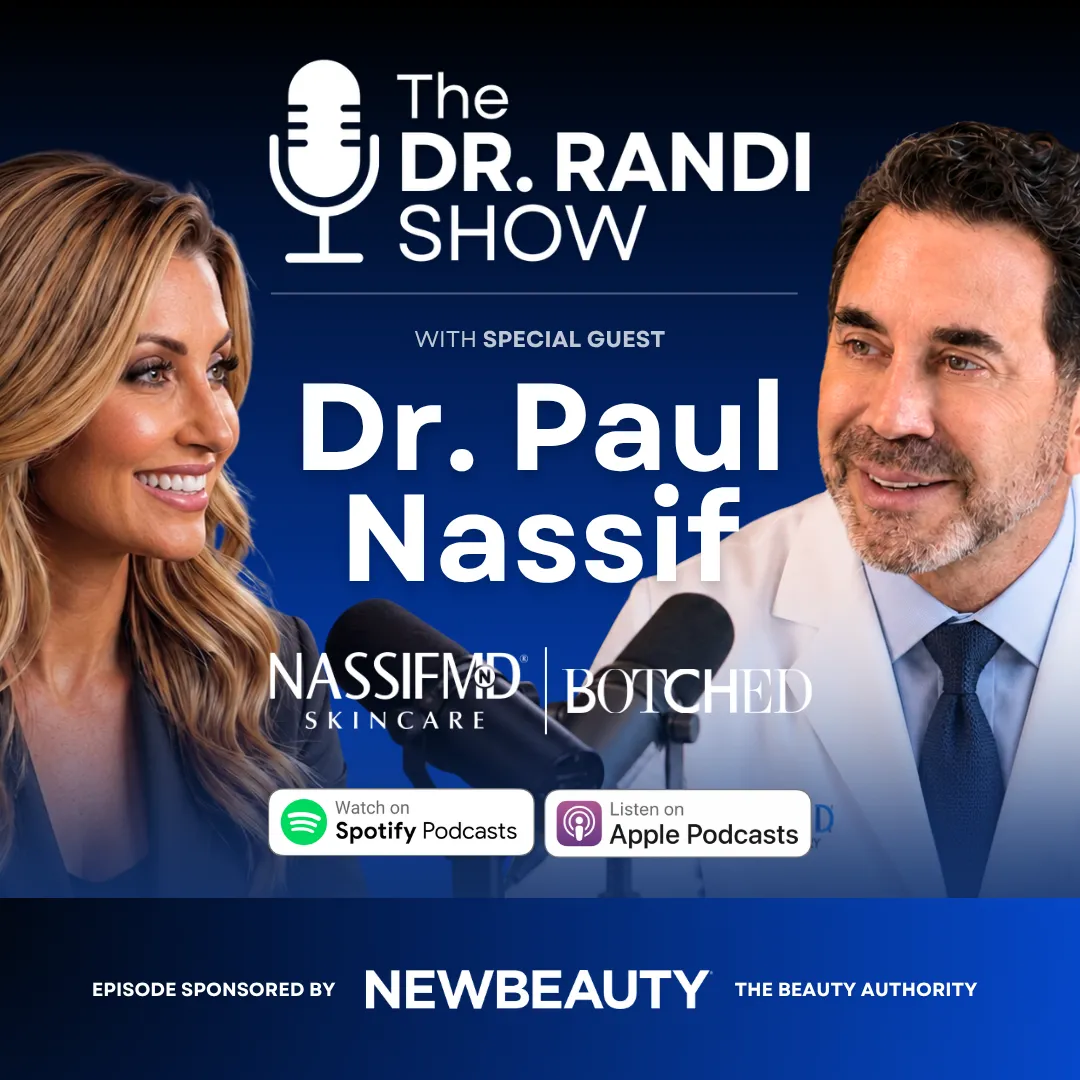
In this episode of The Dr. Randi Show, Dr. Randi sits down with Dr. Paul Nassif for an unfiltered conversation about the dramatic shift happening across aesthetics as patients move away from overfilled features, extreme transformations, and “Instagram face” in favor of healthier skin, refined results, and a more natural approach to aging.
Dr. Nassif shares what he’s seeing inside the operating room, during consultations, and across patient behavior, including the growing demand for subtle rejuvenation, preventative aesthetics, and procedures that help patients look refreshed instead of altered.
🔵 What surgeons are now discovering about filler migration during facelift procedures
🔵 Why patients are asking to look like themselves again instead of filtered versions online
🔵 The rise of “prejuvenation” and younger patients starting treatments earlier
🔵 The psychological impact of AI filters, social media, and beauty standards
🔵 Snatched necks, fat grafting, brow lifts, and the future of modern facelifts
🔵 Dr. Nassif’s new peptide face and eye masks and the inspiration behind the launch
One of the most honest conversations yet about where aesthetics is going next and how the definition of beauty is evolving in real time.
Sponsored by NewBeauty 💄
📱 Listen and Watch on Spotify: https://dub.sh/YXS4qUQ
🎧 Listen Now on Apple: https://dub.sh/XM6pGhj
Episode FAQ
What is the aesthetic reset, and why are patients moving away from the overfilled look?
On this episode of The Dr. Randi Show, facial plastic surgeon Dr. Paul Nassif joins host Dr. Randi Boyette to discuss what she calls an aesthetic reset, a shift away from the more is more era of facial volume toward a less is more approach. Dr. Nassif says the pillow face look of oversized lips and cheeks is subsiding and becoming more natural. In his experience, many patients built up filler gradually by asking for a little more each visit, then realized, sometimes after family members reacted, that they had overdone it. He describes the current mindset as doing one or two syringes first and adding later only if needed.
Where does dermal filler go over time, and can it migrate in the face?
Dr. Paul Nassif explains that filler does not simply dissolve on its own within the 6 to 12 months many patients assume. Performing deep plane facelifts, he has found filler that migrated deep into the face, including along the jawline in a patient whose only history of filler was in the upper face. He says filler can remain in different locations for three or four years and shift over time, which can make one area of the face look unexpectedly full while another looks less so. He notes you generally would not know it migrated unless someone operates and sees it.
How can you find out where old filler has settled, and how is it dissolved?
According to Dr. Paul Nassif, there is no easy way to map filler in the face without surgery. He notes that an MRI or a special CT scan could in theory show it, and that some practitioners using in-office ultrasound, often for injection safety around blood vessels, may be able to spot filler in a given area. He also cautions that dissolving filler is not easy to control precisely, and shares that one patient needed two sessions to have filler dissolved before a facelift.
What are the alternatives to traditional dermal filler for facial volume?
Dr. Paul Nassif says he is a big fan of fat grafting as an alternative to filler when the fat is prepared properly, estimating that on average about 50% of it stays. He uses it with nearly all of his facelifts and feels the fat cells can improve the texture and tone of the skin, not just add volume. He also describes nano fat, which is micro fat that is emulsified and injected into the skin to help with pigmentation, some wrinkles, and texture.
What is a snatched neck or jawline, and how is it achieved surgically?
Dr. Paul Nassif describes the snatched look as a sculpted, sharply angled neck and jawline. In a deep neck lift he may remove part of the submandibular gland to create that line, though he notes some patients have anatomy that allows a gland-sparing approach. He is comfortable offering a tight, sculpted neck as long as it does not end up hollow or looking old, and he cautions that going further than that can look over-sculpted rather than natural.
What is filter dysmorphia, and how do filtered photos affect aesthetic consultations?
Dr. Paul Nassif says he has been talking about filter dysmorphia for about six years. He describes patients bringing in filtered photos of themselves and asking to look like that image, which he says cannot realistically be replicated in person. In his experience this can turn into a psychological struggle where patients lose touch with how they actually look. He is comfortable with a gentle photo filter for a picture, but cautions that many patients still overdo it.
Can AI show what you will look like before an aesthetic procedure?
Dr. Paul Nassif shares that he is a key opinion leader for an AI imaging engine, referred to in the episode as Ageless AI, that lets patients preview what they might look like after treatments such as filler, Botox, or lasers, and is being extended to surgical procedures like brow lifts and facelifts. He compares it to the previews long used in dentistry for braces and Invisalign, and believes seeing an overdone or too filtered result can help a patient recognize in the moment when they are going too far.
What does ethical aesthetics mean, and how often are patients turned away?
Dr. Paul Nassif describes ethical aesthetics as trying to be ethically smart and do what is right for the patient, a philosophy Dr. Randi Boyette connects to his work on television. He estimates he turns away roughly 8 to 10% of patients when their expectations are not realistic or when a request is not something he feels comfortable delivering. He says he once used formal psychological assessments and now reads that readiness himself, with staff trained to flag any red flags before a big procedure.
Is it a good idea to start aesthetic treatments young, and what is prejuvenation?
Dr. Paul Nassif says he has grown comfortable over the past decade with earlier, measured treatments, sometimes called prejuvenation. He is open to procedures such as upper blepharoplasty for genetic excess eyelid skin in the late 20s or early 30s, or a smaller deep plane procedure in the early 40s, and lighter options like Botox as wrinkles begin. He lists roughly 15 non-surgical options including nano fat, fat grafting, fillers, Botox, lasers, HydraFacials, and good skincare with sunscreen. He also warns that aggressive energy based devices, such as intense microneedling radiofrequency, can dissolve facial fat and create scar tissue that complicates later surgery, so he urges caution with the most intense settings.
Why does skin health matter, and what products are in Dr. Paul Nassif’s skincare line?
Dr. Paul Nassif emphasizes that treatments like lasers, Botox, filler, and surgery all work better on healthy, well cared for skin, and that consistency with a daily routine is key. On the episode he and Dr. Randi Boyette discuss several products from his line, including the NassifMD Deco-Lift Neck & Decollete Firming & Lifting Complex for the neck and decolletage, the Peri-Orbital Complex eye cream featuring an ingredient he describes as harvested from Swiss ice wine, the Crepe Inhibitor for crepey skin that is relevant to GLP-1 weight loss, a lip sugar scrub, a reformulated night therapy serum with retinol and vitamin C, a CoQ10 facial oil, and new instant peptide face and eye masks.