What if a facelift could be done in just one hour, without general anesthesia or visible scars?
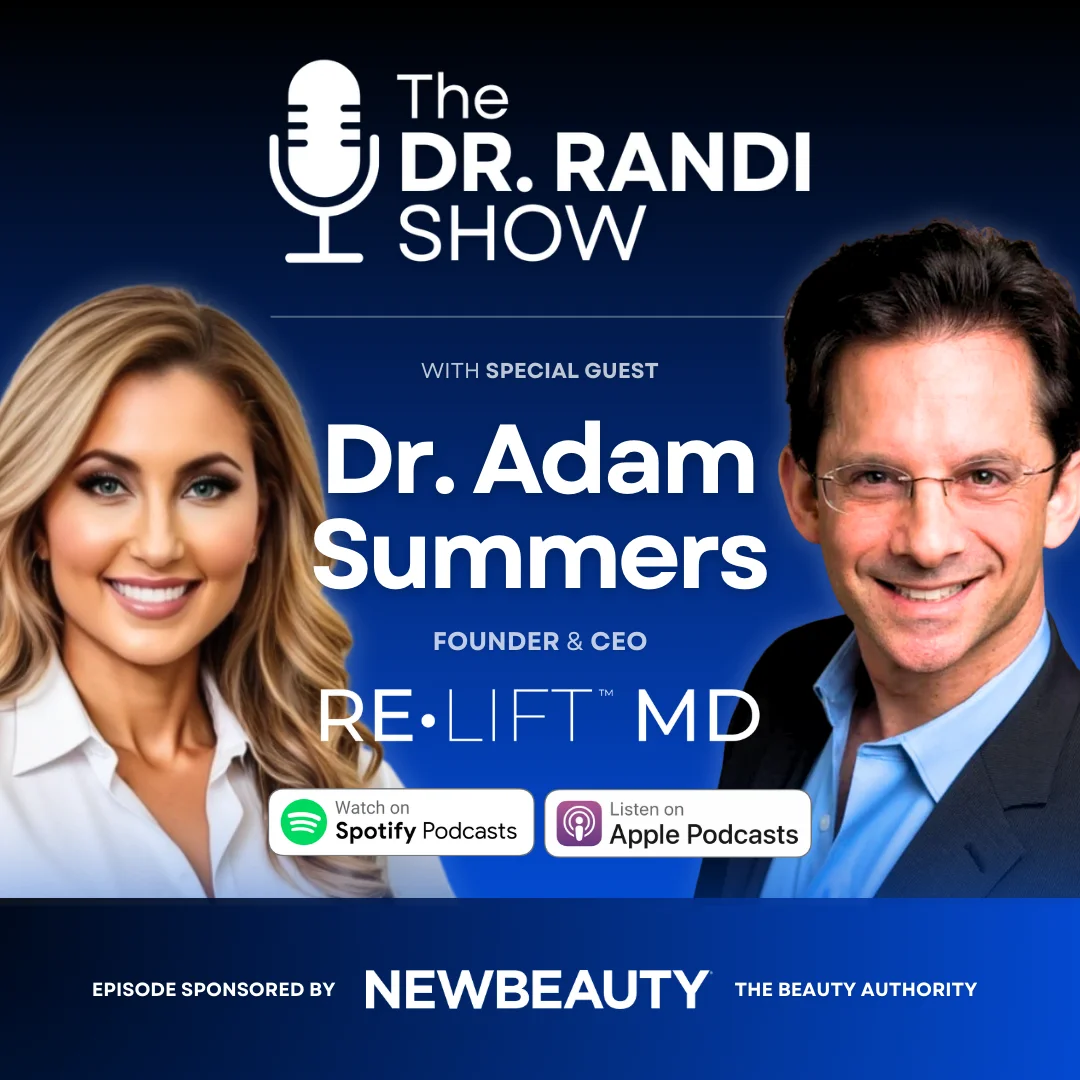
In this episode of The Dr. Randi Show, Dr. Randi Boyette sits down with Dr. Adam Summers to discuss RE•LIFT™ MD: a minimally invasive facial rejuvenation approach that is redefining what modern facelift procedures can look like.
With more than 2,000 successful procedures performed, RE•LIFT™ is designed to be performed in just one hour under local anesthesia. The procedure delivers natural lifting results without visible scars by using hidden entry points and a multi-plane lifting technique. It is performed in-office, eliminating the need for general anesthesia while offering results that have been validated to last more than 10 years.
In this conversation, we explore:
• What makes RE•LIFT structurally different from traditional facelift techniques
• How minimally invasive surgery can still achieve full face and neck lift results
• Why skin quality plays a major role in the longevity of any facelift
• How lasers, fillers, and skin treatments complement surgery
• The future of facial rejuvenation as patients demand natural results with less recovery
Beyond the clinical innovation, RE•LIFT™ also introduces a scalable model for practices, a turnkey platform designed to help integrate efficient, repeatable procedures into aesthetic offerings.
Facelift surgery has long been associated with long operating times, general anesthesia, and significant recovery. Dr. Adam Summers explains why that model is changing, and how RE•LIFT™ is opening the door to a new category of minimally invasive facial lifting procedures that are faster, less disruptive, and designed for the way aesthetic medicine is evolving.
Sponsored by NewBeauty 💄
📱 Listen and Watch on Spotify: https://spti.fi/i5qvCsR
🎧 Listen Now on Apple: https://dub.link/ulQdM78
Episode FAQ
What is the Relift facelift, and how is it different from a traditional facelift?
On The Dr. Randi Show, world renowned plastic surgeon Dr. Adam Summers described Relift as a minimally invasive facelift he created to be performed in about an hour under local anesthesia. He explained that, unlike traditional facelifts that use large incisions around the ears and often require general anesthesia, Relift uses a hidden incision above the ear and leaves no visible scars. In his experience, minimally invasive does not mean minimal results, because the procedure aims to deliver the results of a full face and neck lift, and he said it has been shown to last a decade or more in most of his patients. This reflects Dr. Summers’ personal and professional experience and is not medical advice.
How does the Relift procedure reposition facial tissue and control the midface?
During this episode of The Dr. Randi Show, Dr. Summers explained that controlling the midface was the original motivation behind developing Relift. He shared that with aging the soft tissues of the cheek tend to drop, the support to the infraorbital rim is lost, fullness in the lower eyelid decreases, the smooth transition between the lower eyelid and cheek fades, and the nasolabial folds and jowling become more visible. In his approach, Relift uses internal suturing techniques to reposition and control the deep and superficial tissue planes of the midface rather than lifting away the skin, muscle, and fat in separate layers. This reflects Dr. Summers’ clinical experience and is not medical advice.
What holds a Relift in place over the long term?
Dr. Summers used an orthopedic analogy on The Dr. Randi Show to describe what supports a Relift over time. He compared it to repairing a rotator cuff or ACL injury, where permanent sutures are placed and the body’s own natural healing adds further strength around them. In his experience, the permanent sutures used in Relift work the same way, providing strength when they are inserted while the body’s healing reinforces that support to help hold the lift long term. This reflects Dr. Summers’ clinical experience and is not medical advice.
Is a minimally invasive facelift safer than a traditional or deep plane facelift?
On The Dr. Randi Show, Dr. Summers discussed how he views the risk profile of Relift compared with other facelifts. He noted that deep plane techniques go down to levels where nerves and blood vessels sit, which he said carries a higher risk if those structures are disturbed, and that traditional procedures leave permanent scars around the ears that can be especially problematic for people with short hair or skin of color, including risks of hyperpigmentation or keloids. He described Relift as designed to control the deep and superficial tissue planes without severing those nerves and without visible scars, and said it can be an option for patients such as bald men or more mature individuals who may not be good candidates for general anesthesia. This reflects Dr. Summers’ clinical experience and is not medical advice.
How long do Relift facelift results last, and how does skin quality affect them?
Dr. Summers told The Dr. Randi Show that, for patients with good skin quality, the longevity of a Relift is comparable to a traditional or deep plane facelift, in the range of 10 to 15 years. He emphasized that skin which has lost its elastic quality from sun damage or significant weight changes still needs to be treated directly, because a facelift repositions structure but does not change the quality of the skin itself. In his view, one of the biggest reasons facelift results fall short over time is when skin treatment is not offered as part of the plan. This reflects Dr. Summers’ clinical experience and is not medical advice.
Can you have another facelift after Relift, or have the results re-tightened later?
During the episode of The Dr. Randi Show, Dr. Summers explained that having a Relift does not get in the way of a different facelift procedure in the future. He also shared what he considers an advantage of the minimally invasive approach, that because permanent sutures are placed he can often go back five or ten years later and re-tighten that existing network of sutures to lift everything back to where it was. He noted this can be especially helpful as weight, fat distribution, and bone loss change the underlying foundation over time. This reflects Dr. Summers’ clinical experience and is not medical advice.
Who is a good candidate for the Relift procedure, and who is not?
On The Dr. Randi Show, Dr. Summers described his ideal Relift patient as typically between their forties and seventies, with reasonable to good skin quality and enough cheek volume and structure to work with, who has noticed sagging and would like to turn back the clock. He noted that some patients who have lost significant facial volume, including from GLP-1 weight loss medications such as Ozempic, may have too little structure to manipulate, though he said newer techniques like fat grafting and reinforcing the scaffolding can sometimes help. He added that he has treated candidates as young as their twenties with congenital ptosis, while patients with very extensive volume loss or sagging may need a more extensive procedure than Relift alone. This reflects Dr. Summers’ clinical experience and is not medical advice.
What are procedure day and recovery like after a Relift facelift?
Dr. Summers walked The Dr. Randi Show through the Relift patient experience. He said that because the cheeks and jowls are lifted with internal suturing rather than by manipulating separate layers of skin, muscle, and fat, many patients having the face alone can look good and return to light social activities the next day. He noted that a neck or brow Relift usually requires wearing a wrap afterward to limit swelling. As a surgical procedure, he stressed taking it easy during early healing and avoiding anything strenuous that raises the heart rate or blood pressure or causes sweating. This reflects Dr. Summers’ clinical experience and is not medical advice.
What skin treatments and injectables help maintain facelift results?
On The Dr. Randi Show, Dr. Summers explained that skin care and energy based treatments play a significant role after any facial rejuvenation procedure, because a facelift repositions tissue but does not change the quality of the skin. He mentioned reviewing each patient’s skincare routine and recommending options such as IPL for red and brown spots, CO2 or Erbium laser to tighten skin and build elastin, and, for some patients, fillers and Botox as part of an overall plan. He also noted that energy based treatments generally work best as a series of sessions rather than a single treatment. This reflects Dr. Summers’ clinical experience and is not medical advice.
How does Relift compare to a deep plane facelift?
Dr. Summers addressed the deep plane comparison directly on The Dr. Randi Show. He explained that a deep plane facelift by nature goes into the deeper levels where nerves and blood vessels are located, which he said raises the risk if those structures are bumped or severed. He described Relift as controlling both the deep and superficial soft tissue planes without severing those nerves, and characterized it as, in his words, a safer version of a deep plane and SMAS procedure combined. This reflects Dr. Summers’ clinical experience and is not medical advice.